- +971 43807099
- +971 563244963
- brisunco@emirates.net.ae

- Meet Us
Shed No. 10,
Fresh Express Warehouse, Road B1, DIP 1,
Dubai, UAE.
Shed No. 10,
Fresh Express Warehouse, Road B1, DIP 1,
Dubai, UAE.
New
New
Most CNC machining supplier decisions in Dubai are made on price. The lowest quote wins, the order is placed, and the problems show up later. Wrong tolerances. Missing documentation. Parts that fit during inspection and fail during assembly. By then the project is behind schedule, and the supplier is already quoting the next job.
Knowing how to choose a CNC machining company in Dubai correctly means evaluating capability before cost, not after. This checklist is for procurement managers, maintenance engineers, and plant managers who need a machining partner they can rely on for production runs, emergency parts, and precision components that have to be right the first time.
If you’re unfamiliar with the manufacturing process itself, read our What Is CNC Machining and How Does It Work? Complete Guide before evaluating machining suppliers.
At a Glance
The first question is not how much. It is what machines the shop runs and whether those machines can produce what you need.
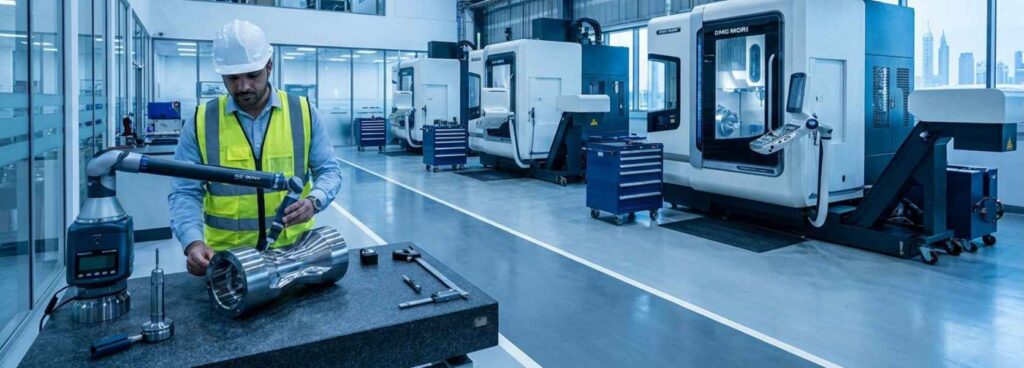
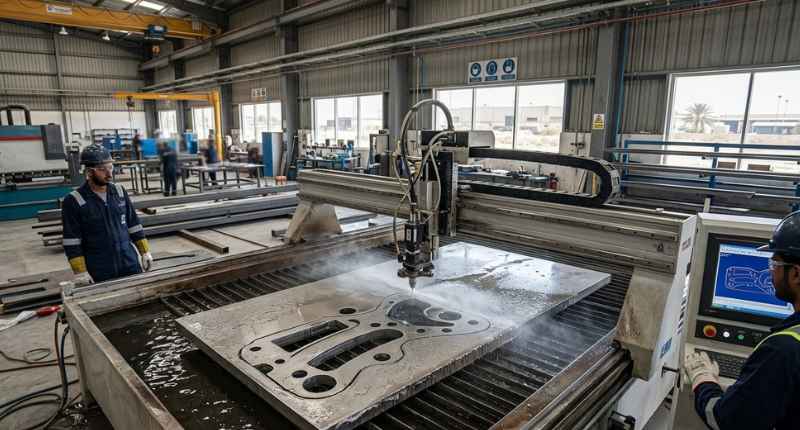
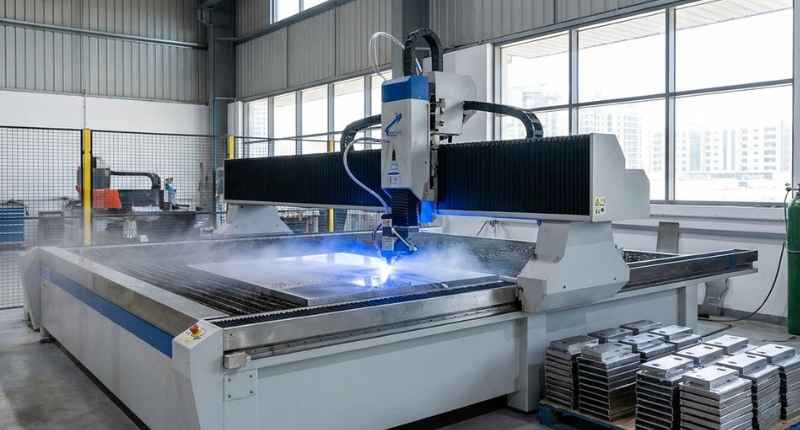
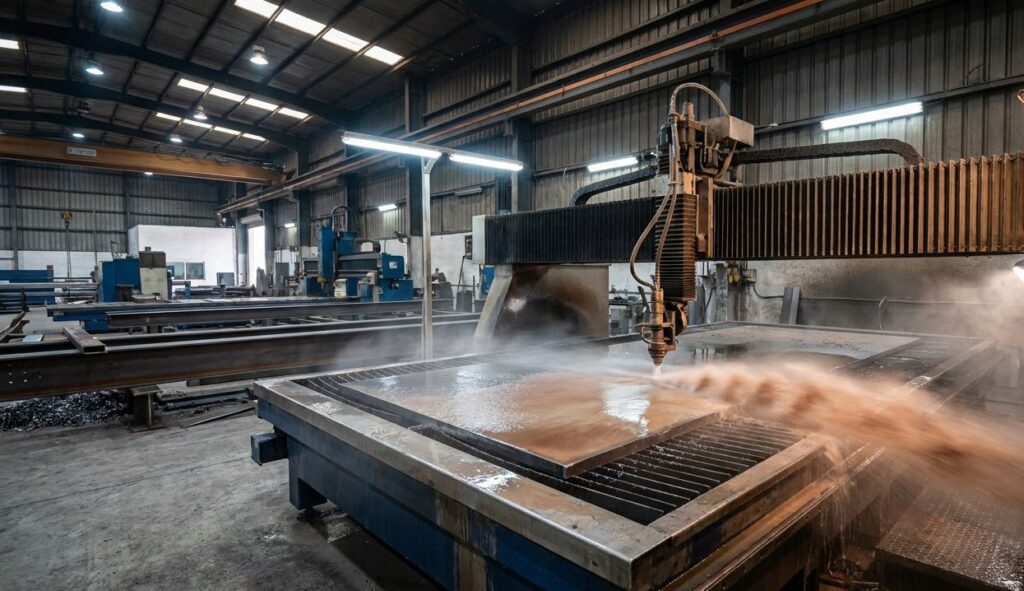
A shop with only turning capability cannot produce milled features. A shop without grinding capacity cannot hold the tight tolerances required for bearing seats and precision bores. Ask for a machine list. Match it against the features your parts require. CNC turning, milling, grinding, and cutting capability in-house means your job does not get subcontracted to a third shop without your knowledge, adding lead time and removing quality control from your visibility.
Our guide to Types of CNC Machines Used in Dubai Workshops: Lathes, Mills & Routers explains which machines are suitable for different component designs and manufacturing requirements.

ISO 9001 certification is the baseline expectation for any serious CNC machining supplier UAE buyers should consider. But the certificate alone is not enough. Ask when it was last audited, which scope it covers, and whether it applies to the specific work you are placing.
A shop that holds ISO 9001 for general fabrication but has never applied it to precision CNC machining is not the same as a shop with an active, audited quality system covering programming, machining, inspection, and documentation across all its work. Ask to see a sample quality record from a recent job. Weld maps, material test reports, and dimensional inspection records presented as a standard deliverable tell you the system is working, not just certificated.
A CNC machine cuts whatever is in the vice. What separates capable shops from average ones is whether the programmers and machinists understand how different materials behave and how to set up the job correctly for each one.
Medium carbon steel, stainless steel, duplex stainless, aluminium, and engineering plastics all require different cutting speeds, feed rates, tooling, and coolant strategies. A shop that machines everything the same way produces inconsistent results across different materials. Ask specifically about the material your parts are made from. If the answer is vague, that is the answer to your supplier evaluation question.
You can also explore our guide on Materials Used in CNC Machining: Aluminum, Steel, Brass & Plastics to understand how different materials affect machining quality, durability, and production performance.
For facilities running older equipment, discontinued machinery, or assets where original drawings no longer exist, reverse engineering capability is not a bonus feature. It is a requirement.
Ask whether the shop can take a worn or broken part, measure it, build a specification from those measurements, and machine a replacement without original drawings. Ask how they handle worn tooth profiles on gears, or features that have been damaged beyond clean measurement. A shop with genuine reverse engineering experience will give you a specific and confident answer. One without it will give you a qualified maybe.
Production facilities in Dubai do not break down on schedule. A CNC machining partner that only operates during standard business hours with two-week lead times is not useful when a critical shaft fails on a Friday evening, and the line needs to run by Monday.
Ask directly: what is the response time for an emergency breakdown part? Is material held in stock for common grades? Can programming be prioritised outside normal scheduling? Does the shop have experience producing replacement parts under time pressure? The answers to these questions define whether the supplier is a production resource or a genuine maintenance partner.
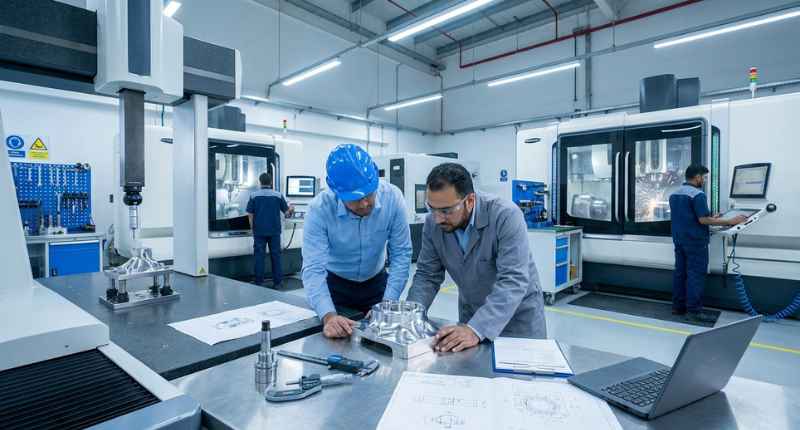
A quote is a document. A workshop visit is evidence. Before awarding significant machining work to any Dubai supplier, visit the facility and look at four things.
Machine condition tells you whether the shop invests in maintenance. A CNC machine that has not been serviced correctly drifts in calibration, and that drift shows up in part dimensions. Cleanliness and organisation tell you whether quality is a culture or a claim. Tooling management, specifically whether cutting tools are organised, labelled, and replaced before they are worn out, tells you whether the shop controls its process or reacts to it. And the inspection area tells you whether quality is checked throughout the job or only at the end when it is too late to fix problems economically.
Understanding the Step-by-Step CNC Machining Process: From CAD File to Finished Part makes it easier to assess whether a supplier follows a structured manufacturing and quality-control workflow.
Subcontracted inspection creates two problems. It adds lead time you cannot control, and it removes quality accountability from the machining shop. If the shop sends finished parts to an external inspection provider, the loop between finding a problem and fixing it extends by days.
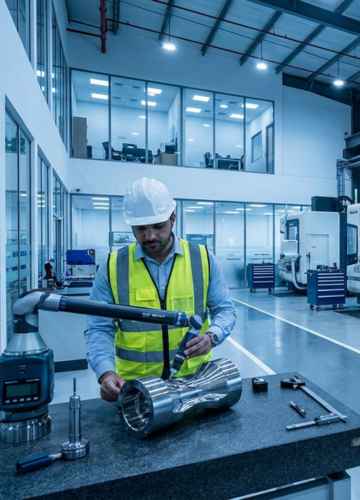
Ask whether the shop has calibrated measuring equipment in-house, including micrometers, bore gauges, height gauges, and a CMM for complex parts. Ask whether NDT capabilities like dye penetrant or magnetic particle inspection are available on site. A shop that cannot inspect its own work cannot guarantee its own output.
A machining shop that has worked extensively for the retail fitout sector is not automatically qualified to produce precision components for oil and gas or marine applications. Industry experience shapes how a shop approaches material traceability, documentation, and inspection requirements, and those approaches vary significantly between sectors.
Ask for references from clients in your industry. Oil and gas, marine, construction, food processing, and pharmaceutical clients all have different compliance expectations, and a shop that has successfully delivered to those expectations will be specific about which clients, which project types, and what standards applied. Vague references to having worked across many industries are not references.
For procurement teams managing assets with maintenance records, warranty obligations, or regulatory compliance requirements, the data package that comes with a machined part is as important as the part itself.
A complete CNC machining data package includes the material test report or mill certificate, the dimensional inspection record showing actual measurements against drawing tolerances, the welder or operator qualification record if welding is part of the scope, and any NDT reports generated during production. Ask what a standard data package looks like for the type of work you are placing. If the shop looks confused by the question, that tells you everything about how they manage quality records.
After working through the checklist above, price becomes a meaningful comparison. Before that, it is just a number.
Understanding CNC Machining vs Manual Machining also helps buyers choose the most suitable manufacturing method based on batch size, tolerances, complexity, and overall production cost.
A lower quote from a shop that cannot demonstrate reverse engineering capability, does not hold ISO 9001, subcontracts inspection, and has no emergency response capability is not a saving. It is a deferred cost that will appear as rework, field failure, or extended downtime. A higher quote from a shop that can demonstrate all of the above is a known cost with a predictable outcome.
The CNC machining supplier checklist UAE buyers who manage critical assets need is not complicated. It is a structured way of separating shops that can do the work from shops that can quote it.
Knowing how to choose a CNC machining company in Dubai comes down to asking the right questions before the order is placed.
Price fits into the decision after those factors are confirmed, not before.
Brightsun Industries provides CNC machining services in Dubai for industrial clients across oil and gas, marine, construction, and manufacturing who need precision parts, emergency replacements, and reverse-engineered components produced to a documented quality standard.
Contact Brightsun Industries to discuss your machining requirements and request a facility visit.
Q1: What is the most important factor when choosing a CNC machining company in Dubai?
Machine capability matched to your specific part requirements is the starting point, because a shop without the right machine types will subcontract work or compromise on features, both of which reduce quality control and extend lead times.
Q2: What certifications should a CNC machining supplier UAE buyers consider holding?
ISO 9001 is the baseline, covering the quality management system across programming, machining, inspection, and documentation, with additional code certifications required for oil and gas, marine, or pressure equipment applications.
Q3: How do I know if a CNC machining company in Dubai can handle emergency breakdown parts?
Ask directly about response time for emergency jobs, whether common material grades are held in stock, and whether the shop has a track record of producing replacement parts under time pressure outside standard scheduling.
Q4: Why is a workshop visit important before awarding CNC machining work in Dubai?
A visit reveals machine condition, shop organisation, tooling management, and inspection practices that a quote document cannot show, and these factors directly influence the dimensional accuracy and consistency of finished parts.
Q5: What should a complete CNC machining data package include?
A complete data package includes the material test report, dimensional inspection record with actual measurements against drawing tolerances, operator qualification records, and any NDT reports generated during production.
Q6: Can a CNC machining supplier in Dubai produce parts without original drawings?
Yes, shops with genuine reverse engineering capability can measure a worn or broken original part, build a specification from those measurements, and machine a replacement to that specification without any original manufacturer drawings.
Q7: How does material knowledge affect the quality of CNC machined parts?
Different materials require different cutting speeds, feed rates, tooling, and coolant strategies, and a shop that does not adjust its approach for each material produces dimensional variation and poor surface finish that only shows up during assembly or in service.
Q8: What is the risk of choosing a CNC machining company that subcontracts inspection?
Subcontracted inspection adds uncontrolled lead time between finding a problem and correcting it, and removes quality accountability from the machining shop, making it harder to resolve non-conformances quickly on time-sensitive jobs.
Q9: How do I compare CNC machining quotes from different Dubai suppliers accurately?
Compare quotes on what is included, specifically whether inspection, documentation, material certification, and surface treatment are line items or assumptions, before comparing the total price, because excluded items inflate the final cost after award.
Q10: Why do industry-specific references matter when choosing a CNC machining supplier in Dubai?
Oil and gas, marine, and pharmaceutical clients have specific documentation, traceability, and inspection requirements that general fabrication experience does not prepare a shop for, and references from your sector confirm the supplier has met those requirements before.
At a Glance
Related Blogs

Shed No. 10, Fresh Express Warehouse,
Road B1, Dubai Investments Park 1,
Dubai, UAE.
+971 43807099
+971 563244963
+971 503226480