- +971 43807099
- +971 563244963
- brisunco@emirates.net.ae

- Meet Us
Shed No. 10,
Fresh Express Warehouse, Road B1, DIP 1,
Dubai, UAE.
Shed No. 10,
Fresh Express Warehouse, Road B1, DIP 1,
Dubai, UAE.
New
New
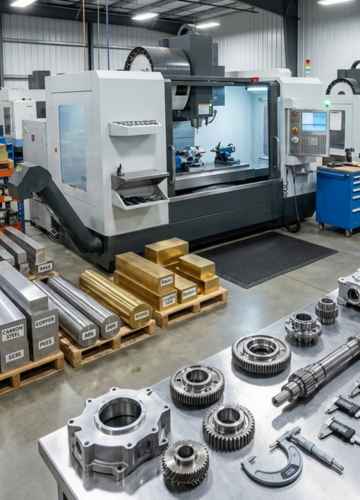
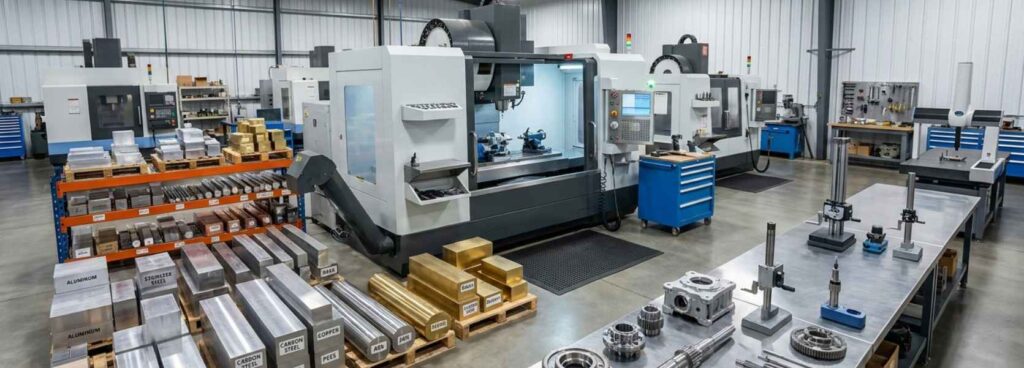
Thousands of machines and cars, medical equipment, and machines used in factories use precision parts every day. But have you ever thought about how these parts are so powerful, so light, or so strong? The solution is in the selection of best materials used in CNC machining. It is not possible to have a high-quality part even with the most sophisticated CNC machine when the appropriate material is not selected.
In Brightsun, we know that finding the appropriate material is only as important as the machining process. If you need the best material to use in CNC machined parts or are new to what CNC machining is and how it works, this guide will help you know the merits of using aluminium, steel, brass, and plastics so you can decide rightly on which material should be used in your next project.
At a Glance
Each CNC project begins with the process of choosing the right raw material. CNC machines carve off a solid block until the desired shape is produced. Various materials react differently during machining, and it is important to select the appropriate material.
Some of the most common materials used in CNC machining are:
The materials have varying degrees of strength, stability, weight, and machinability.
In case you are new to what is CNC machining and how it works, keep in mind that the finest CNC machine will not give any good results when the wrong material is chosen.
Before selecting the right material, it’s helpful to understand the complete manufacturing workflow. Read our What is CNC Machining and How Does It Work? Complete Guide to learn how CNC technology transforms raw materials into precision components.
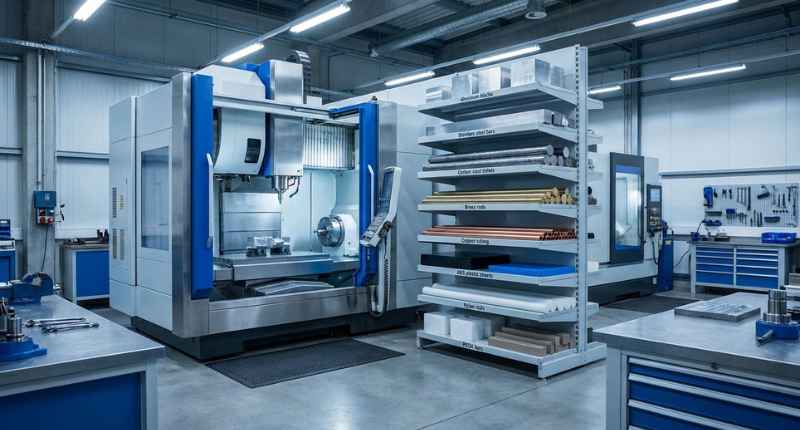
One of the most common materials in CNC machining is aluminium, which provides the best combination of machinability, strength, and weight.
It is simple to cut, gives smooth finishes, and lessens the time of machining. This contributes to the popularity of aluminium in prototypes and in large production batches.
The benefits of aluminium include:
Most industries use aluminium due to its ability to enable quicker manufacturing without loss of accuracy.
Some of the most widely used grades include:
Grade | Best Used For |
6061 | General engineering parts |
7075 | Aerospace components |
5052 | Marine applications |
2024 | High-strength aircraft parts |
Aluminium is commonly used in:
Different materials are machined using specialized equipment depending on the component geometry and production requirements. Learn more in our guide to Types of CNC Machines Used in Dubai Workshops: Lathes, Mills & Routers.
Aluminium is believed to be the most suitable material for CNC machined components due to its portability and low production cost in most lightweight applications.
If you are considering questions like what is CNC machining and how it operates, many people will recommend aluminium as a starter material due to its ease to machine and, at the same time, show high dimensional accuracy.
Steel is strong and has been known to have a prolonged service life. It is one of the most reliable materials used in CNC machining when components must withstand heavy loads, impact, or continuous operation.
Steel is slower to machine than aluminum, but it is of excellent service in very hard-working industrial applications.
There are various types of steels that are usually machined in accordance with the demands of the project.
Carbon Steel
Carbon steel is widely used in structural components and equipment in industries due to its great strength.
Applications include:
Alloy Steel
Alloy steel has other elements like chromium, nickel, or molybdenum added as a way of enhancing hardness and wear resistance.
Its most common uses are:
Stainless Steel
Stainless steel can provide good resistance against corrosion and has great strength.
Popular grades include:
These grades are popular in:
For applications requiring maximum durability, stainless steel is often considered the best material for CNC machined parts , particularly when moisture or chemicals are involved.
Steel has a number of significant benefits:
The machining of steel may increase time, but the increased lifespan of the substance can make it the most useful in the industry.
One of the most credible materials applicable in CNC machining is brass due to its simplicity in machining, which leaves a smooth surface finish. It is also good at corrosion resistance and electrical conductivity and can therefore be used in both practical and decorative parts.
Brass finds much use in:
To ensure a clean finish on precision parts, brass can be the best choice of material to use for CNC-machined parts.
Plastics are engineering materials that are employed in CNC machining. They are light, resistant to corrosion, and can be used in applications where there is no need for metal.
Common options include:
Most manufacturers have found that plastics are the most suitable material to use for CNC machined parts where weight savings or resistance to chemicals are required.
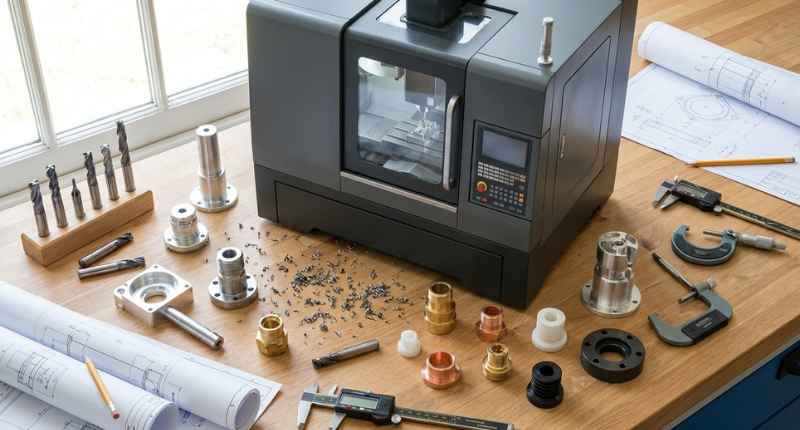
The correct material is based on the needs of your application.
When choosing a material, think of the following factors:
When you are learning about what CNC machining is and how it works, you must keep in mind that selecting the appropriate material is as valuable as the machining process.
Brightsun assists customers in choosing the appropriate material among long-lasting, high-quality CNC components.
Once you’ve selected the right material, understanding the complete production workflow is equally important. Explore our Step-by-Step CNC Machining Process: From CAD File to Finished Part to see how precision components are manufactured from design to final inspection.
After selecting the right material, use our How to Choose a CNC Machining Company in Dubai: Checklist for Buyers to evaluate suppliers based on machining capability, quality assurance, inspection standards, and production expertise.
These are the mistakes to avoid:
Materials in CNC machining significantly contribute to product quality, durability, and machining efficiency.
Material selection is only one part of an efficient manufacturing strategy. Understanding when CNC machining or manual machining is the better option can further improve production efficiency. Read our guide on CNC Machining vs Manual Machining for a detailed comparison.
In need of quality CNC machining products? Brightsun manufactures accurate CNC parts in aluminum, steel, brass, and engineering plastics so that they suit your specific project needs. Examine our CNC Machining Services to find a suitable solution for your business.
The most used ones are aluminium, steel, stainless steel, brass, copper, and engineering plastics such as ABS, Nylon, Delrin, and PEEK.
The best material for CNC machined parts depends on their use. Aluminum is suitable for weight-sensitive parts, whereas steel is suitable for strong industrial parts.
Aluminium is lightweight and resistant to corrosion; machining is easy, and the surface finish is excellent.
Yes. Brightsun assists customers in choosing the most appropriate materials involved in CNC machining in accordance with their applications, performance requirements, and budget.
Yes. Brightsun is a manufacturer of uniquely designed CNC components such as aluminum, steel, brass, stainless steel, and engineering plastics as per various industry demands.
Yes. In numerous industries, engineering plastics find their application as wear-resistant, lightweight, and corrosion-resistant components.
Plastics, stainless steel, aluminum, and brass are all good corrosion-resistant materials, depending on the environment in which they operate.
Yes. Brass is also one of the simplest to machine and suitable for high-precision parts with a smooth surface.
Take into account the aspects of strength, weight, resistance to corrosion, working conditions, surface finishing, and the budget.
By reading a step-by-step guide on what CNC machining is and how it works, you can get acquainted with the process and select the appropriate material to start your CNC projects.
At a Glance
Related Blogs

Shed No. 10, Fresh Express Warehouse,
Road B1, Dubai Investments Park 1,
Dubai, UAE.
+971 43807099
+971 563244963
+971 503226480