- +971 43807099
- +971 563244963
- brisunco@emirates.net.ae

- Meet Us
Shed No. 10,
Fresh Express Warehouse, Road B1, DIP 1,
Dubai, UAE.
Shed No. 10,
Fresh Express Warehouse, Road B1, DIP 1,
Dubai, UAE.
New
New
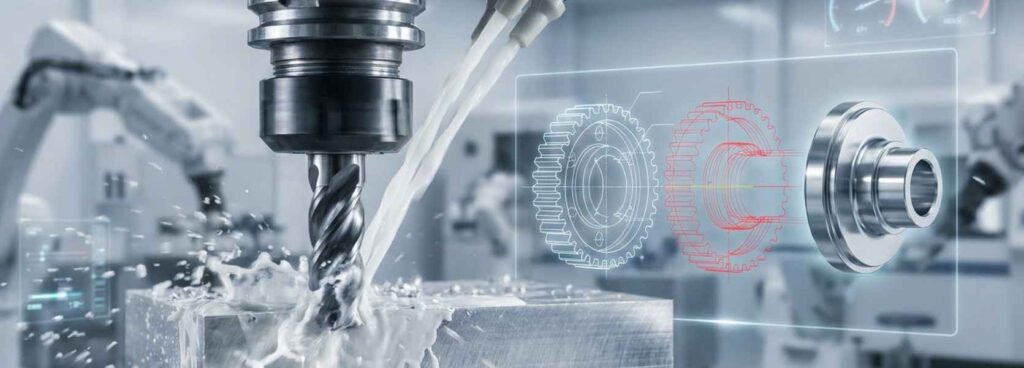
Modern industries rely on precision parts that fit perfectly and perform reliably. It could be aerospace, automotive, construction, oil and gas, or heavy engineering, but the standards of all components are the same: high quality. Understanding the CNC machining process step by step will enable businesses to realise how the digital designs are converted into precise finished products. The CNC (Computer Numerical Control) machine market is global, with an estimated market size of USD 101.22 billion and projected sizes of USD 251.61 billion in 2025 and USD 251.61 billion in 2034, respectively.
Each machining project at Brightsun has a structured flow of work which guarantees standard quality output, speed and reliability throughout production.
In this guide, you’ll learn how CNC parts are manufactured, the importance of each stage of the process, and how advanced CNC technology is used to produce complex components with high levels of precision and repeatability.
At a Glance
All successful machining initiatives have a systematic workflow. Although the individual projects can differ in terms of material and component design, the basic manufacturing steps are virtually similar.
Step | Process | Purpose |
1 | Project Review | Understand design requirements |
2 | CAD Design | Create the digital model |
3 | CAM Programming | Generate machine instructions |
4 | Machine Setup | Prepare tools and materials |
5 | CNC Machining | Manufacture the component |
6 | Surface Finishing | Improve appearance and durability |
7 | Quality Inspection | Verify dimensions and tolerances |
In case you are new to this technology, we have a guide on what CNC machining is and how it works, which explains the hands-on before transitioning into the entire manufacturing process.
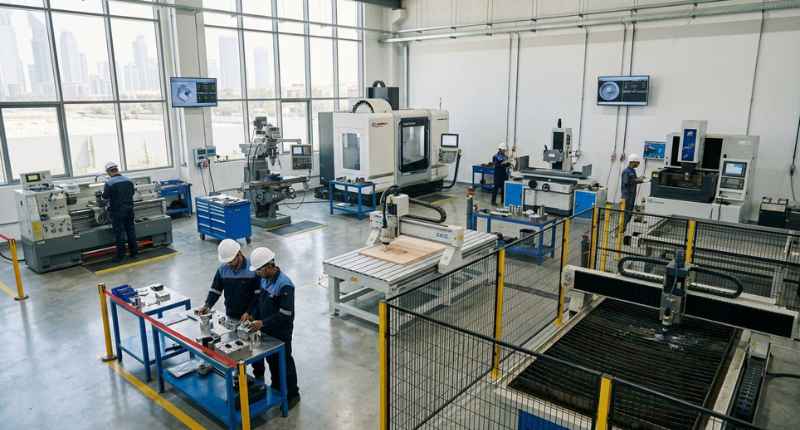
Each successful machining project starts way before the machine cuts metal.
At Brightsun, the engineers initially analyse the drawings, CAD files, customer tolerances, production volume, material specifications and finishing requirements. This planning phase will enable all manufacturing obstacles to be identified in advance and ensure that the part can be manufactured effectively.
At this stage, the team reviews:
Detailed inspection minimises production and eliminates extra machining processes, enhancing efficiency.
The second step in the CNC machining process step by step is to prepare a detailed digital representation.
The CAD(Computer-Aided Design) software, like SolidWorks, AutoCAD, Inventor or Inventor, is used by engineers to get a precise 3D representation of the component. Each hole, pocket, curve, slot, and surface is outlined in the design.
The CAD model also contains important manufacturing information such as:
The more successful the CAD model, the smoother the manufacturing process will be.
This step also describes how CNC parts are manufactured, as the digital model serves as a blueprint for all machining operations.
After approval of the design, engineers transfer to CAM (Computer-Aided Manufacturing) software.
The CAM transforms the CAD model into machining steps that the CNC machine can comprehend.
In the process of programming, the engineers make a choice:
The program then produces G-code, which operates all the motions of the CNC machine.
This is a digital planning phase that significantly contributes to the future machining speed, tool life, and quality of the finished part.
To better comprehend this workflow, review what CNC machining is and how it works, which outlines how CAD, CAM, and CNC systems interact.
The simulation software is used to verify the CAM program before machining.
This is among the most significant steps, as it helps identify errors in the programmes even before production begins.
The simulation examines:
Through early detection of these problems, manufacturers save time and materials, loss of machines and costly mistakes in production.
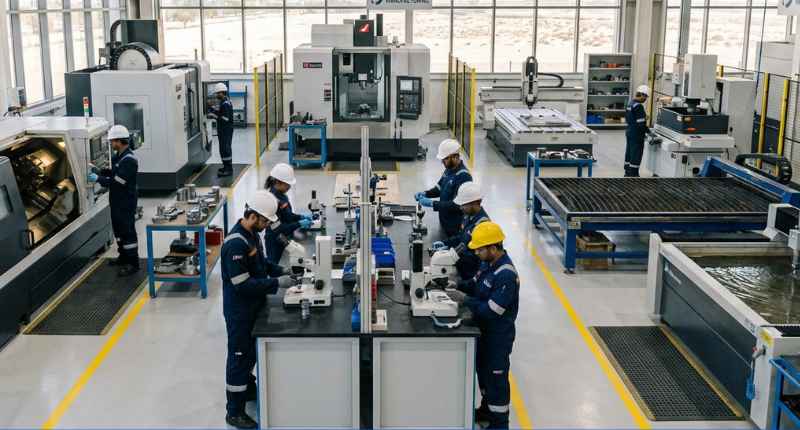
Once verified, the CNC machine is then prepared by the technicians in production.
This step involves choosing the right machine, setting up cutting tools, ensuring the raw material is ready, and determining the coordinates of the work.
At Brightsun, proper machine setup is critical since a minor error in alignment can influence the end part.
During setup, technicians:
The material is well clamped to ensure vibration is avoided during machining to help provide improved surface quality and dimensional accuracy.
Correct installation maximises tool life, as well as enhancing production consistency.
The quality of a finished component also depends on selecting the right equipment. Explore our guide on Types of CNC Machines Used in Dubai Workshops: Lathes, Mills & Routers to understand how CNC lathes, milling machines, routers, grinders, and EDM machines are used for different manufacturing applications.
Machine setup also depends on the material being machined, as different metals and engineering plastics require specific tooling and cutting parameters. Learn more in our Materials Used in CNC Machining: Aluminum, Steel, Brass & Plastics guide.
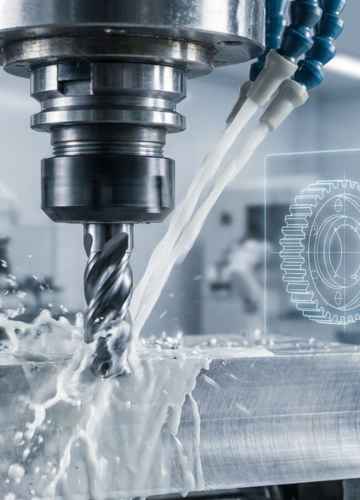
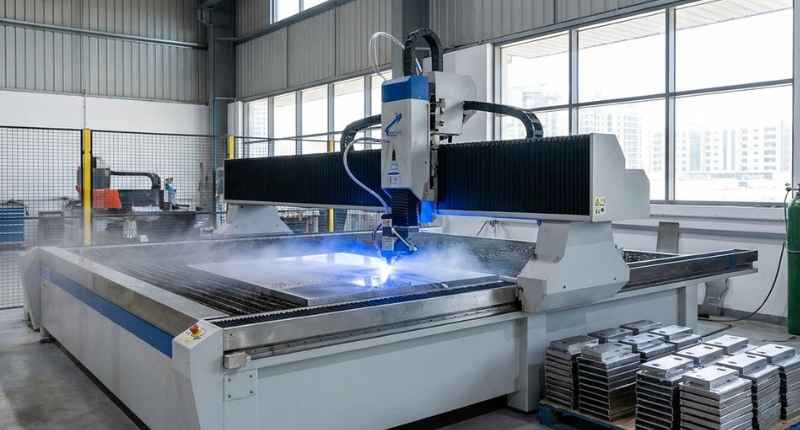
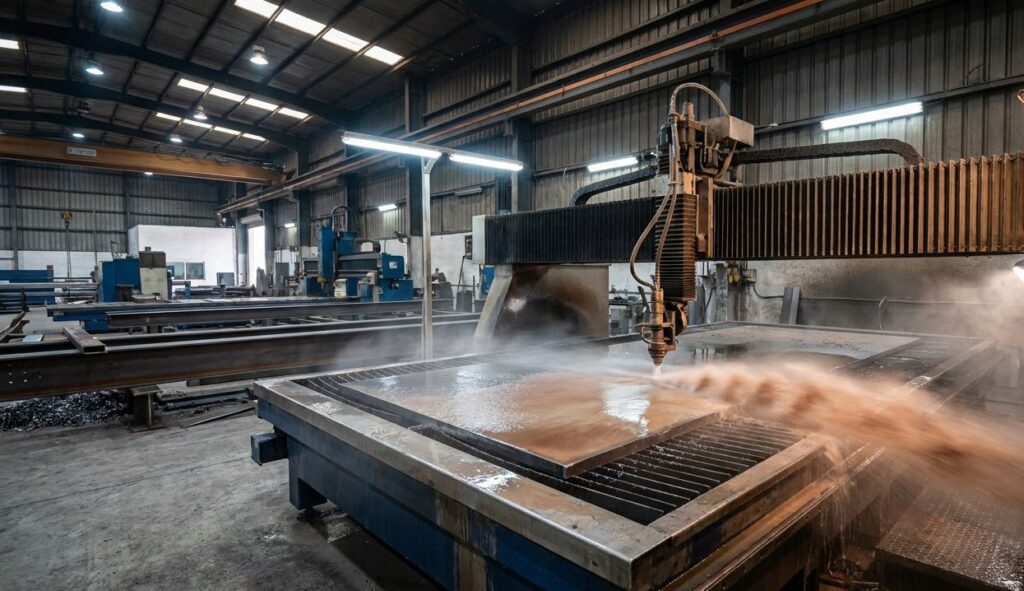
Once the set-up is finished, the actual machining commences. This is where the digital design is a tangible aspect. The CNC machine reads the G-code programmed and executes all the operations with very high accuracy.
This step is simply a description of the way how CNC parts are manufactured since the machine cuts away material one layer at a time until the desired shape is completed.
Several machining processes could be employed depending on the part.
While CNC follows a highly structured manufacturing process, not every component needs CNC production. See CNC Machining vs Manual Machining: The Question UAE Factories Are Still Getting Wrong to understand when manual machining is the more practical and cost-effective choice.
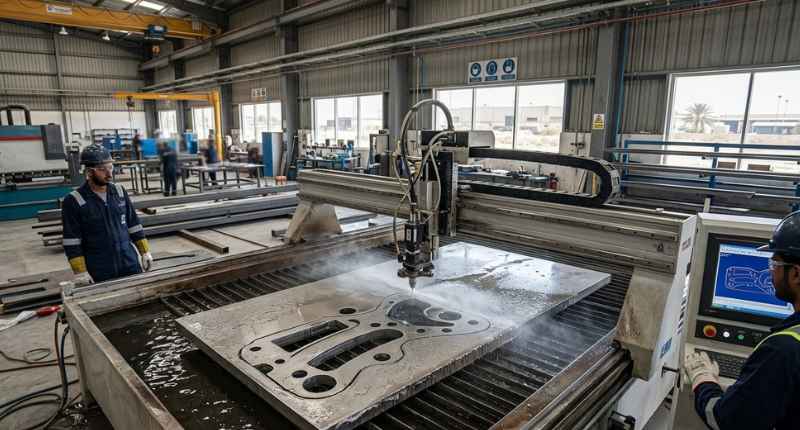
CNC milling is a machining process of sustainably rotating cutting tools to cut a stationary workpiece. It is perfect for creating flat surfaces, slots, pockets, grooves, and intricate 3D shapes.
In turning, the workpiece is rotated, with the cutting tool remaining in place. This is the common way of producing shafts, bushes, pins and other circular parts.
The drilling process is accurate in producing holes and tapping for internal threads to hold bolts and fasteners.
In current CNC machining centres, most incorporate these processes into a single system. This saves on production time and enhances accuracy.
In case you need to know what CNC machining and its workflow is like, you can read our guide on what CNC machining is and how it works.
The necessary shape is created through machining, but it is also likely that many of the parts require further finishing before delivery.
Surface finishing enhances both aesthetics and performance. It is also effective in enhancing corrosion resistance and wear life.
Some typical finishing operations are:
The finishing technique relies on the material and the end use of the component.
An example is that aluminium components can be anodised to enhance corrosion resistance, or steel components can be powder coated as well.
It is another significant step in the manufacture of CNC parts, particularly those needed in industries where reliability counts.
The last phase in production is quality inspection and approval of delivery of the component.
All the critical dimensions are compared with the original engineering drawing to verify that the part meets customer specifications.
At Brightsun, inspection can involve:
The inspection team checks:
This makes the entire CNC machining process step by step to make sure that all the completed components meet the standards required before being dispatched.
The selection of different CNC machines is based on the design of components and the production needs.
Machine Type | Primary Use | Common Applications |
CNC Milling Machine | Flat and complex surfaces | Machine parts, housings, moulds |
CNC Lathe | Cylindrical components | Shafts, rollers, bushes |
CNC Drilling Machine | Accurate hole making | Flanges, brackets |
CNC Router | Cutting softer materials | Plastic and composite sheets |
5-Axis CNC Machine | Multi-sided machining | Aerospace and precision engineering |
The selection of the appropriate machine enhances the speed of production, accuracy and efficiency.
Going with an appropriate machining partner is as crucial as determining the appropriate manufacturing process. Brightsun integrates state-of-the-art CNC technology with skilled engineering services to produce quality parts with the high standards needed by industry.
With Brightsun, you enjoy:
Brightsun adheres to a systematic machining process to achieve uniform quality and reliable output regardless of the scale of requirement: one or two components or a bulk manufacturing job.
Seeking high-quality CNC machining services? Connect with Brightsun today to talk about your project and have custom parts machined to your specifications.
The CNC machining process step by step is as follows: review of the project, CAD file designed, CAM file programmed, setup of the machine, machining, finishing, and quality check before delivery of the completed part.
CAD is used to design the part digitally by defining its dimensions, tolerances, and features before machining.
To view the process of how CNC parts are manufactured , the CAD model is transformed into CAM software, which interprets G-code for the CNC machine. The machine then follows these instructions to produce the finished component.
The most prevalent are aluminium, stainless steel, mild steel, brass, copper, titanium, and engineering plastics.
CNC machining finds a wide application in the aerospace, automotive, oil and gas, marine, construction, medical and heavy engineering sectors.
Milling involves using rotating cutting tools to cut a fixed workpiece, whereas turning involves rotating the workpiece to produce cylindrical elements.
Recent CNC machines are capable of making parts with extreme accuracy, making them applicable in high-precision industries.
Checking quality programs, machine set-ups, tooling of the right quality and scrutiny during the production process ensure continuous quality of the product produced.
The time required to produce parts is based upon the size, complexity, material, quantity, and finishing.
Brightsun integrates CNC technology, professional engineers, high-standard inspection and efficient project management to provide precision machined parts for projects of both larger and smaller sizes.
At a Glance
Related Blogs

Shed No. 10, Fresh Express Warehouse,
Road B1, Dubai Investments Park 1,
Dubai, UAE.
+971 43807099
+971 563244963
+971 503226480