- +971 43807099
- +971 563244963
- brisunco@emirates.net.ae

- Meet Us
Shed No. 10,
Fresh Express Warehouse, Road B1, DIP 1,
Dubai, UAE.
Shed No. 10,
Fresh Express Warehouse, Road B1, DIP 1,
Dubai, UAE.
New
New
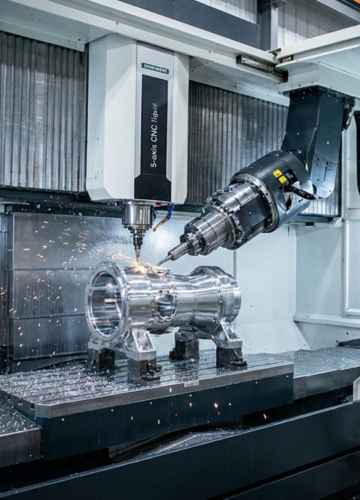
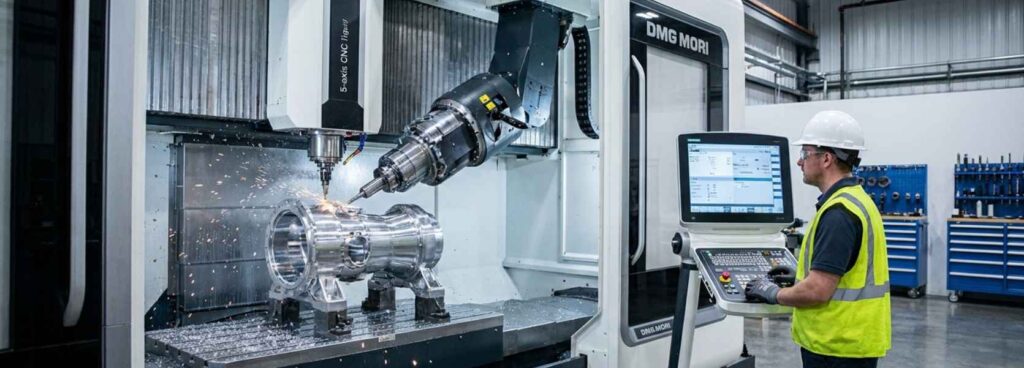
CNC machining stands for Computer Numerical Control machining. It is a manufacturing process where pre-programmed computer software controls the movement of cutting tools and machinery. The machine follows a precise digital instruction set to cut, drill, mill, or turn raw material into a finished part.
Before CNC, machinists operated cutting tools by hand. Every movement depended on the operator’s skill and attention. CNC removed that variable. The same program runs the same sequence of cuts every time, on every part, without deviation.
That consistency is what makes CNC machining the foundation of precision manufacturing across industries, from aerospace to oil and gas to heavy equipment repair.
However, CNC is not always the right solution for every job. Learn when conventional machining is the better choice in our guide CNC Machining vs Manual Machining: The Question UAE Factories Are Still Getting Wrong.
At a Glance
The process moves through four stages: design, programming, setup, and machining.
Everything starts with a CAD file. CAD stands for Computer-Aided Design. The engineer or designer builds a three-dimensional model of the part in CAD software, defining every dimension, feature, and tolerance the finished part must meet.
For standard parts, the CAD file comes from the original equipment manufacturer’s drawings. For reverse-engineered parts, the CAD model is built from physical measurements taken off the worn or broken original component.
The CAD file goes into CAM software. CAM stands for Computer-Aided Manufacturing. The CAM program translates the 3D design into a toolpath, which is the exact route the cutting tool will follow to produce the part. It selects cutting speeds, feed rates, depth of cut, and tool change sequences based on the material being machined and the features being produced.
The output of the CAM process is a G-code file. G-code is the language CNC machines read. It is a series of instructions that tell the machine where to move, how fast to move, and what to do at each position.
Before machining begins, the operator loads the correct cutting tools into the machine’s tool holders, secures the raw material workpiece in the machine’s clamping system, sets the work offsets so the machine knows exactly where the material is in relation to its cutting tools, and runs a verification check on the program.
Setup is where experience matters most. A correctly set-up machine with the right tooling produces accurate parts consistently. A poorly set-up machine produces scrap, regardless of how good the program is.
The program runs. The machine executes the toolpath, removing material in a controlled sequence until the finished part geometry is achieved. The operator monitors the process, checks dimensions at defined intervals, and makes offset adjustments if measurements drift from the target.
On modern CNC machines, in-process measurement probes check part dimensions automatically during the machining cycle and feed corrections back to the control system without stopping production.
While this guide provides an overview of the CNC workflow, our Step-by-Step CNC Machining Process: From CAD File to Finished Part explains each manufacturing stage in detail, from project review and CAD modelling to CAM programming, machining, finishing, and quality inspection.
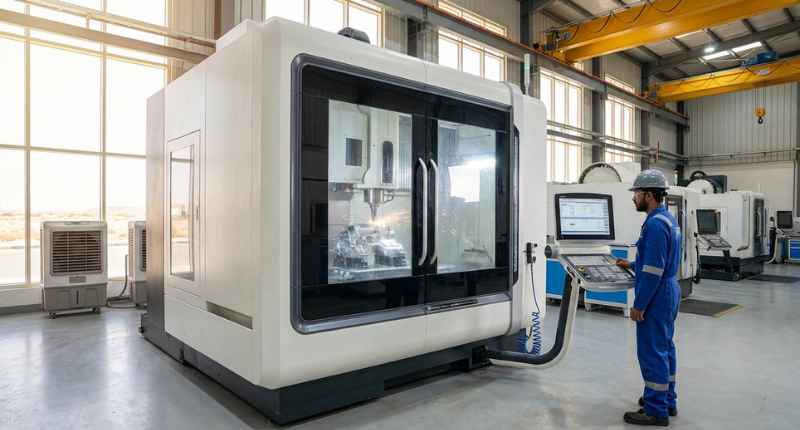
Different machines are built for different cutting operations. Most production facilities and machine shops run a combination of these types.
A CNC lathe rotates the workpiece against a stationary cutting tool. It produces cylindrical parts: shafts, bushings, pins, flanges, and threaded components. The cutting tool moves along two axes, controlling the diameter and length of the turned feature.
For facilities in the UAE running rotating equipment, CNC turning is the process behind replacement shafts, bearing journals, and custom spindles produced at short notice when OEM parts are unavailable or have long lead times.
A CNC milling machine holds the workpiece stationary while the cutting tool rotates and moves across it. Milling produces flat surfaces, slots, pockets, holes, and complex contoured profiles. A 3-axis milling machine moves the tool in X, Y, and Z directions. 4-axis and 5-axis machines add rotational axes, allowing complex parts to be machined in a single setup without repositioning.
Drilling on a CNC machine follows a programmed hole pattern with consistent depth and diameter across every part. For components requiring multiple holes in precise locations, CNC drilling eliminates the positional errors that accumulate with manual layout and drilling.
CNC grinding uses an abrasive wheel to remove very small amounts of material to achieve tight dimensional tolerances and fine surface finishes that cutting tools cannot reach. Bearing seats, gauge surfaces, and hardened components that need precise final dimensions after heat treatment go through CNC grinding.
EDM stands for Electrical Discharge Machining. It removes material through controlled electrical sparks rather than cutting. EDM machines complex internal profiles, sharp internal corners, and features in hardened materials that cutting tools cannot reach. It is used for die and mould work and for producing intricate features in tool steel components.
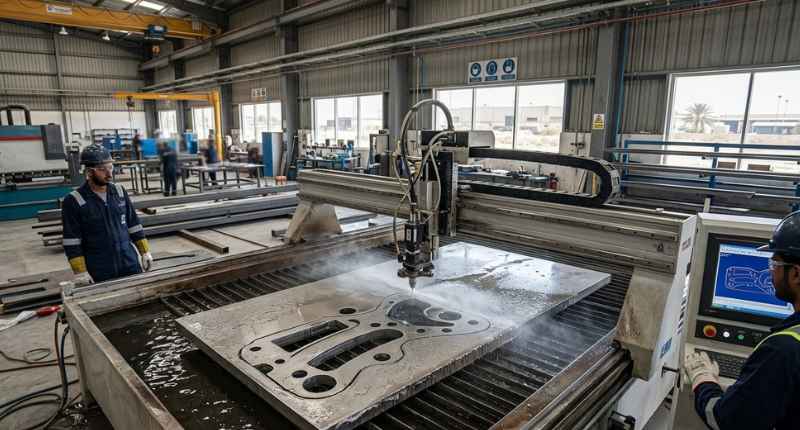
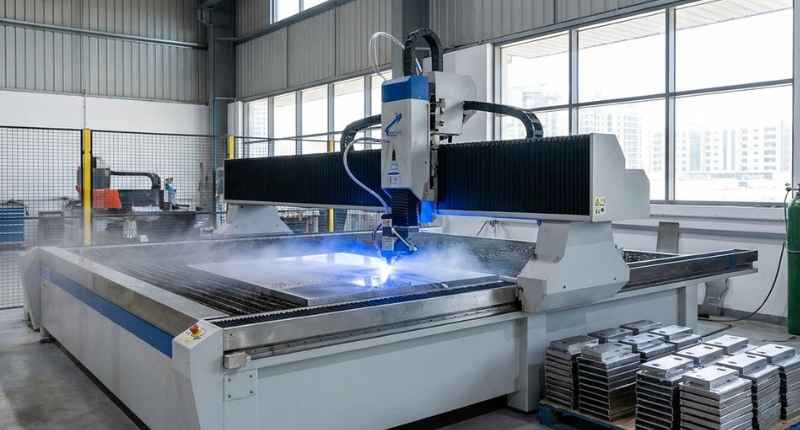
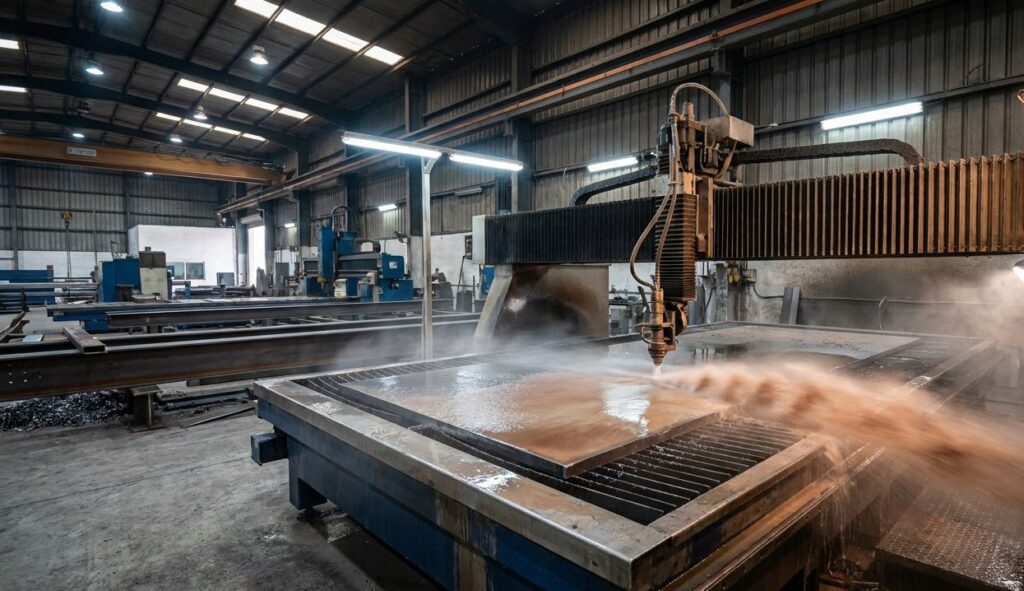
To learn how each machine is used in real-world manufacturing, read our guide on Types of CNC Machines Used in Dubai Workshops: Lathes, Mills & Routers, which explains the applications, advantages, and ideal use cases of CNC lathes, milling machines, routers, grinders, EDM, plasma, and waterjet cutting systems.
CNC machines cut a wide range of materials. The choice of material determines the cutting tools used, the speeds and feeds applied, and the surface finish achievable.
Steel and alloy steels are the most common materials in industrial CNC machining. Medium carbon steels machine well and produce strong, wear-resistant parts after heat treatment. Alloy steels with chromium, molybdenum, or nickel additions offer higher strength and toughness for demanding applications.
Stainless steel is harder to machine than carbon steel but is specified where corrosion resistance is needed. In the UAE, stainless steel components are common in oil and gas, food processing, and marine applications.
Aluminium machines faster than steel and is used where weight reduction is a priority. Structural components on offshore platforms, vehicle parts, and aerospace components are commonly machined from aluminium alloys.
Copper and brass machines cleanly and are used for electrical components, valve bodies, and bearing materials.
Plastics and composites are machined on CNC equipment for components where weight, electrical insulation, or chemical resistance is required.
Choosing the right material directly affects machining speed, durability, corrosion resistance, and overall part performance. Read our guide on Materials Used in CNC Machining: Aluminum, Steel, Brass & Plastics to compare the most commonly used CNC materials and their applications.
Tolerance is the permissible variation in a dimension. A shaft specified at 50.000mm with a tolerance of plus or minus 0.025mm must measure between 49.975mm and 50.025mm to be acceptable.
CNC machining routinely holds tolerances of plus or minus 0.025mm on standard features. Tighter tolerances of plus or minus 0.005mm are achievable on precision grinding operations. These tolerances matter because industrial components like bearing fits, gear meshes, and hydraulic valve bores will not function correctly outside their specified tolerance range.
This is why CNC machining is used for replacement parts in critical equipment. A manually produced part might be close to the right dimension. A CNC-machined part is within tolerance by design and verified by measurement before it leaves the workshop.
In the UAE industrial context, CNC machining plays a specific and practical role beyond standard production manufacturing.
When equipment breaks down, and OEM parts are unavailable, on extended lead time, or discontinued, CNC machining enables local manufacture of replacement components. A worn gear, a broken shaft, a cracked flange, or a non-standard structural bracket can be measured, modelled, programmed, and machined locally in days rather than weeks.
The CNC machining process UAE facilities rely on for emergency repair work follows the same stages as production machining but with a faster front end. Reverse engineering from the worn part replaces the design stage. CAM programming is prioritised ahead of other scheduled work. Material is drawn from stock rather than ordered. The result is a correctly specified replacement part produced in a timeframe that keeps downtime manageable.
For construction, oil and gas, marine, and manufacturing facilities operating in Dubai and across the UAE, local CNC machining capability is a maintenance resource as much as it is a production tool.
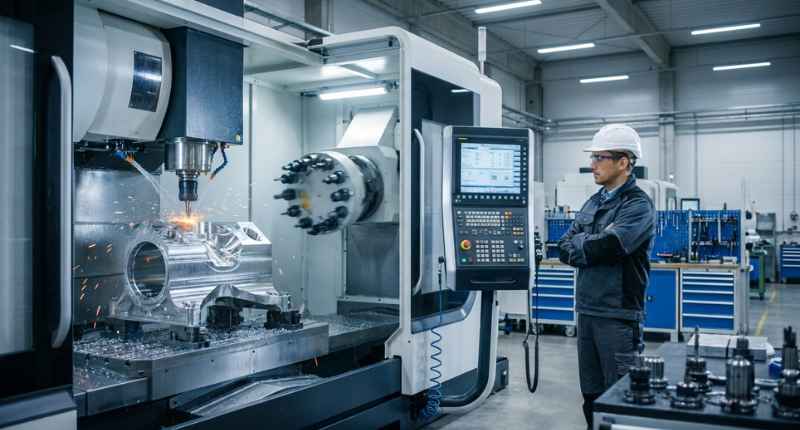
Producing a part to the right dimensions requires measurement at multiple stages, not just a final check before dispatch.
In-process measurement during machining catches dimensional drift before it becomes scrap. First article inspection verifies that the first part of a new program meets the specification before the full batch runs. Final inspection checks all critical dimensions against the drawing, using calibrated instruments including micrometers, bore gauges, CMM machines, and surface finish testers.
For ISO 9001-certified machine shops, quality records are maintained for every job. These records document the material used, the measurements taken, the tools applied, and the operator who performed the work. For oil and gas and marine clients in the UAE, this documentation is not optional. It is part of the deliverable.
Not every machine shop in the UAE offers the same capability. For industrial clients with critical component requirements, these are the factors that matter.
Machine range: A shop with only turning capability cannot produce milled features. Confirm the machine types available match the features your parts require.
Material knowledge: The right cutting parameters for medium carbon steel are different from those for duplex stainless or aluminium alloy. A shop that machines everything the same way produces inconsistent results across different materials.
Quality certification: ISO 9001 certification confirms the shop operates within a documented quality management system. For oil and gas, marine, and construction clients, this is a baseline requirement.
Emergency response capability: For breakdown and repair work, the relevant question is not just what the shop can make but how fast it can respond. Stock material, flexible scheduling, and experienced programmers who can work from reverse-engineered data are what make same-day or next-day turnaround possible.
In-house inspection: Calibrated measuring equipment and qualified inspection personnel should be in-house, not subcontracted. A shop that sends parts out for measurement cannot control quality or schedule effectively.
Before selecting a supplier, use our How to Choose a CNC Machining Company in Dubai: Checklist for Buyers to evaluate machine capability, quality systems, inspection standards, and emergency response before placing an order.
CNC machining is the process that turns a digital design into a precisely dimensioned physical part, consistently and verifiably, across any material and any production volume. It sits at the centre of modern manufacturing and at the centre of industrial maintenance and repair for facilities that cannot wait weeks for OEM replacement parts.
Understanding how the process works from CAD design through G-code programming to final inspection gives procurement managers, maintenance engineers, and plant managers a clearer basis for evaluating CNC machining partners and for making faster, better-informed decisions when equipment goes down and a replacement part is needed quickly.
Brightsun Industries provides CNC machining services in Dubai and across the UAE for industrial clients in oil and gas, marine, construction, and manufacturing.
With ISO 9001:2015 certification, in-house CNC turning and milling capability, and experience in reverse engineering and emergency part production, Brightsun Industries supports facilities that need precision-machined components produced correctly and on time.
Contact the Brightsun Industries team to discuss your machining requirements. Here is our contact form.
Q1: What is CNC machining and how does it work in simple terms?
CNC machining is a process where a computer program controls cutting tools to shape raw material into a finished part with precise dimensions, removing the need for manual tool operation.
Q2: What is the CNC machining process UAE industrial facilities use for emergency parts?
UAE facilities use reverse engineering to measure a worn or broken part, build a CAD model from those measurements, generate a CNC program, and machine the replacement locally in days rather than waiting weeks for an imported OEM part.
Q3: What tolerances can CNC machining hold?
Standard CNC machining holds tolerances of plus or minus 0.025mm on most features, with tighter tolerances achievable on precision-ground surfaces for bearing fits and similar critical dimensions.
Q4: What materials can be CNC machined?
CNC machines cut steel, alloy steel, stainless steel, aluminium, copper, brass, titanium, and a range of engineering plastics and composites depending on the machine type and tooling available.
Q5: How long does CNC machining take for a replacement industrial part?
For straightforward parts with material in stock, CNC machining can be completed within one to three days. Complex parts requiring heat treatment or multiple setups typically take three to five days.
Q6: What is the difference between CNC turning and CNC milling?
CNC turning rotates the workpiece against a stationary cutting tool to produce cylindrical parts, while CNC milling moves a rotating cutting tool across a stationary workpiece to produce flat surfaces, slots, pockets, and complex profiles.
Q7: Can CNC machining produce a replacement part without original drawings?
Yes, through reverse engineering, a worn or broken original part is measured, a CAD model is built from those measurements, and the CNC program is generated from that model without any original manufacturer drawings.
Q8: What is G-code and why does it matter in CNC machining?
G-code is the programming language CNC machines read, containing the precise instructions for tool movement, cutting speed, and feed rate that determine the accuracy and surface finish of the finished part.
Q9: How does ISO 9001 certification affect the quality of CNC machined parts?
ISO 9001 certification requires the machine shop to maintain documented quality records for every job, including material traceability, inspection measurements, and operator records, which gives clients verifiable proof that parts were produced and checked to the specified standard.
Q10: What is the difference between CNC machining and conventional machining?
Conventional machining relies on the operator’s manual control of the cutting tool, which introduces variability between parts, while CNC machining runs the same programmed toolpath on every part, producing consistent dimensions across an entire batch without operator-dependent variation.
At a Glance
Related Blogs

Shed No. 10, Fresh Express Warehouse,
Road B1, Dubai Investments Park 1,
Dubai, UAE.
+971 43807099
+971 563244963
+971 503226480