- +971 43807099
- +971 563244963
- brisunco@emirates.net.ae

- Meet Us
Shed No. 10,
Fresh Express Warehouse, Road B1, DIP 1,
Dubai, UAE.
Shed No. 10,
Fresh Express Warehouse, Road B1, DIP 1,
Dubai, UAE.
New
New
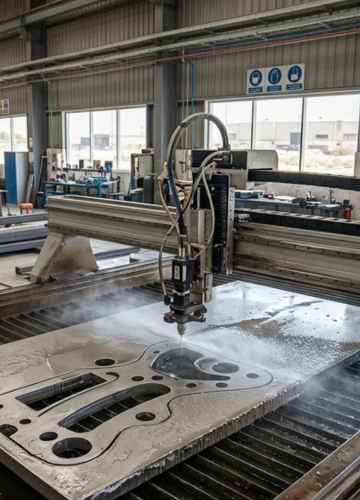
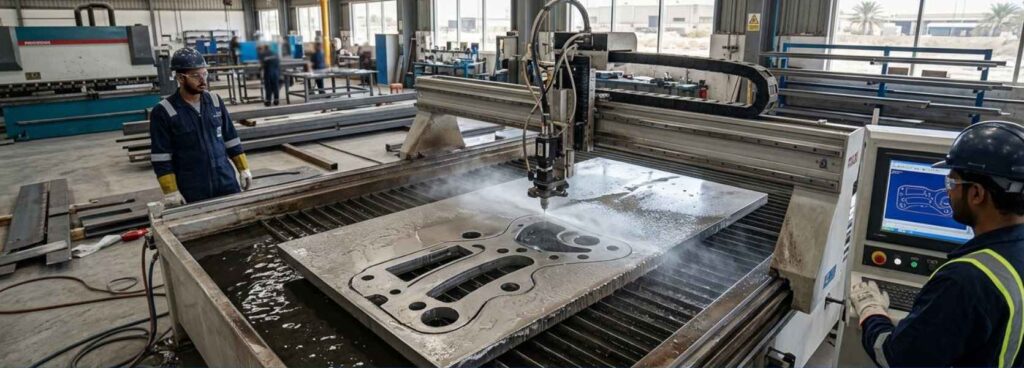
What if a thick metal plate could be cut into a complex shape without exposing its edge to cutting heat? That simple advantage explains why waterjet cutting applications in industries are becoming important for demanding fabrication work.
For UAE oil, gas, and construction projects, cutting quality can affect fit, finishing, fabrication time, and material use. At Brightsun, waterjet technology supports projects that need accurate profiles across different materials and thicknesses. From flanges and brackets to structural features, industrial waterjet cutting use cases UAE businesses need are highly varied.
This guide explains where waterjet works best and why it deserves a place in modern industrial fabrication.
At a Glance
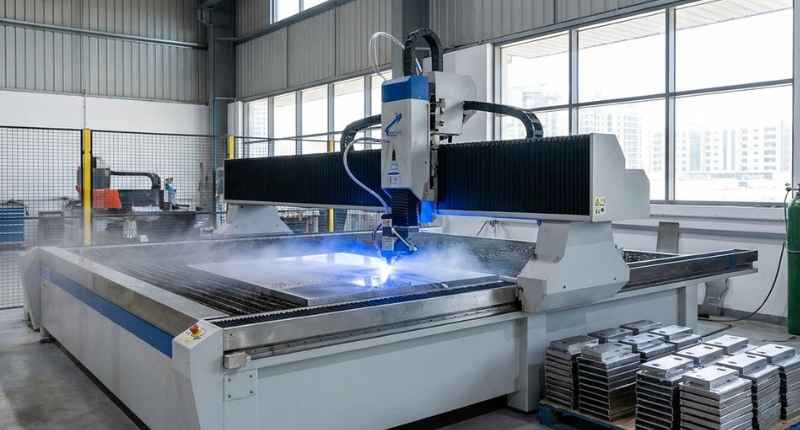
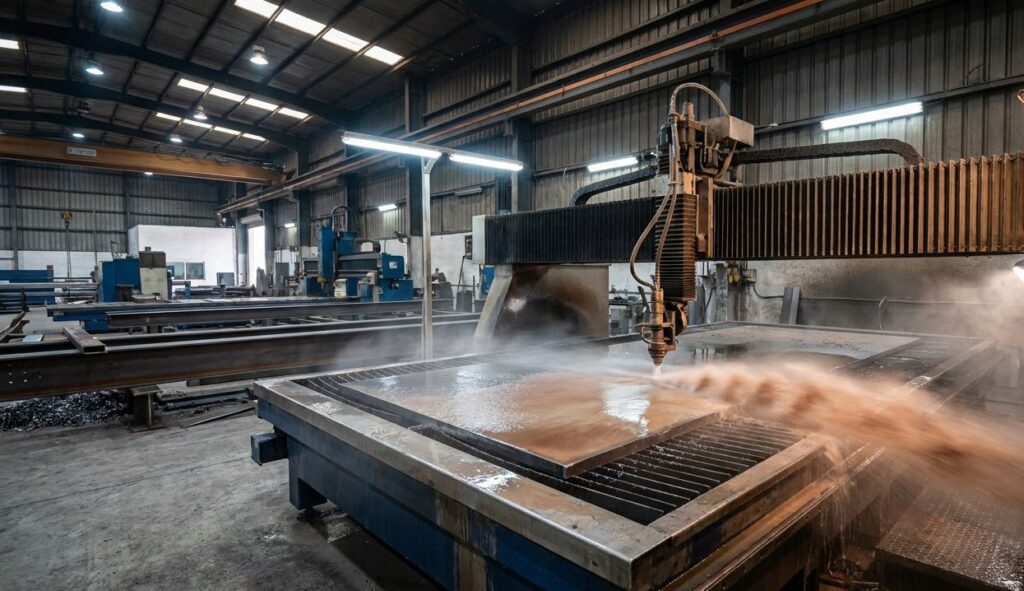
Waterjet uses a high-pressure stream of water. For harder materials, an abrasive is added to help cut the workpiece. Unlike thermal cutting, abrasive waterjet is a cold machining method.
Research shows it can process metals and other hard materials without creating the heat-affected zone linked with thermal processes.
This makes waterjet useful when the material condition around the cut matters. It can also produce complex profiles with relatively low cutting force.
This is particularly important for projects where waterjet cutting with no heat-affected zone helps preserve the material properties at the cut edge.
Brightsun’s waterjet cutting and fabrication services support metals, plastics, wood, and fibres. Its waterjet bed measures 3 m × 2 m, with stated cutting capacity up to 150 mm thick.
The value of waterjet cutting applications in industries goes beyond making a shape.
Key benefits include:
A 2024 review also describes abrasive waterjet as a process capable of cutting a very wide range of materials.
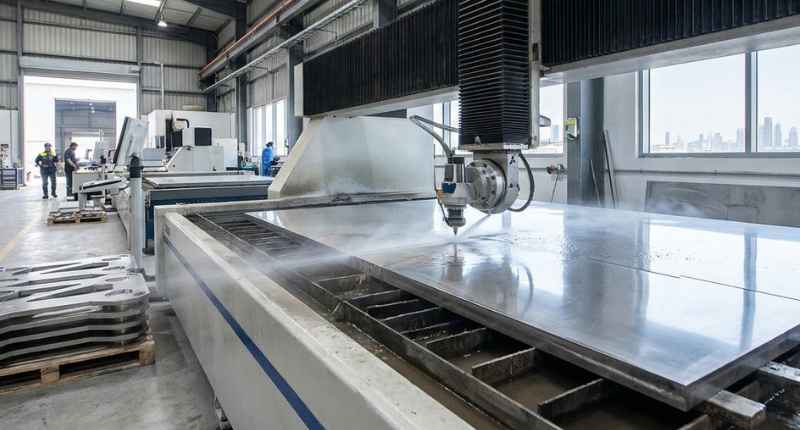
Oil and gas work can involve tough materials, thick sections, custom profiles, and parts that later require welding or machining. These needs create several practical industrial waterjet cutting use cases UAE engineering teams can consider.
This is especially relevant as ADNOC targets crude oil production capacity of 5 million barrels per day by 2027, supporting continued activity across the UAE energy supply chain
Custom flanges, pipe supports, mounting plates, equipment bases, and similar profiles often start as plate material. Waterjet cutting applications in industries can create the initial profile before drilling, machining, welding, or finishing.
For oil and gas projects, possible applications include:
Brightsun also produces custom fabricated industrial work, including projects such as pigging launcher receivers, tanks, and special-purpose units.
Material choice is a major factor in oil and gas fabrication. Stainless steel, mild steel, aluminium, and specialist alloys can require different cutting approaches.
One reason waterjet cutting applications in industries stand out is that abrasive waterjet can machine hard-to-cut materials while limiting thermal damage. This can be useful where the cut part must move into later fabrication stages without a thermally affected edge.
For projects involving thicker sections, understanding the capabilities and limits of waterjet cutting for thick metal plates
For project teams comparing processes, Brightsun’s guide to waterjet cutting vs laser cutting explains how material, thickness, heat, speed, and finish affect the choice.
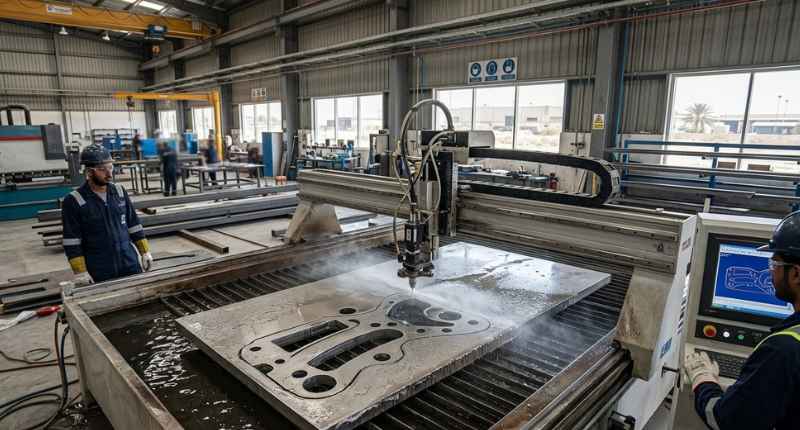
Construction is another strong area for waterjet. UAE projects need custom metal parts for buildings, infrastructure, interiors, façades, supports, and architectural features.
The sector remains important to the national economy. UAE federal statistics reported that construction grew 11.1% in 2025 and represented 12.9% of non-oil GDP.
In construction, waterjet cutting applications in industries can support brackets, connection plates, base plates, panels, covers, decorative profiles, and other custom shapes.
Common industrial waterjet cutting use cases UAE contractors may encounter include:
Application | Typical Need | Why Waterjet Helps |
Brackets | Custom profiles | Detailed repeatable shapes |
Base plates | Thick plate cutting | Cold cutting |
Panels | Decorative patterns | Complex profiles |
Covers | Custom dimensions | Flexible CAD-based cutting |
Stone features | Architectural shapes | Suitable for many non-metals |
Prototype parts | Design testing | No dedicated profile tooling |
UAE construction output reached US$107.2 billion in 2024, according to Knight Frank, which forecasts continued growth through 2029.
Waterjet is not limited to heavy engineering. Waterjet cutting applications in industries can also serve architectural work where shape and appearance matter.
Metal panels, aluminium features, stone inserts, signage elements, floor patterns, and custom design pieces can be cut from digital drawings. This gives architects and contractors more freedom when a standard rectangular or straight-cut component will not meet the design.
A major strength of waterjet is material range. Industrial waterjet cutting use cases UAE projects can involve mild steel, stainless steel, aluminium, plastics, stone, composites, and other suitable materials.
Brightsun states that its wider workshop processes mild steel, stainless steel, brass, aluminium, super duplex, bronze, nylon, Teflon, and copper. Its industrial waterjet cutting guide provides more detail on how the process fits UAE fabrication.
Waterjet is useful, but it is not automatically the best process for every job. Waterjet cutting applications in industries should be assessed against the actual project requirements.
When comparing processes, this waterjet cutting vs laser cutting industrial guide can help evaluate factors such as material, thickness, heat, speed, and edge requirements.
Before requesting a quote, prepare:
For a wider view of these benefits, see Brightsun’s guide to the benefits of waterjet cutting for industrial projects.
For prototypes, replacement components, and short production runs, cost-effective waterjet cutting for small batch production
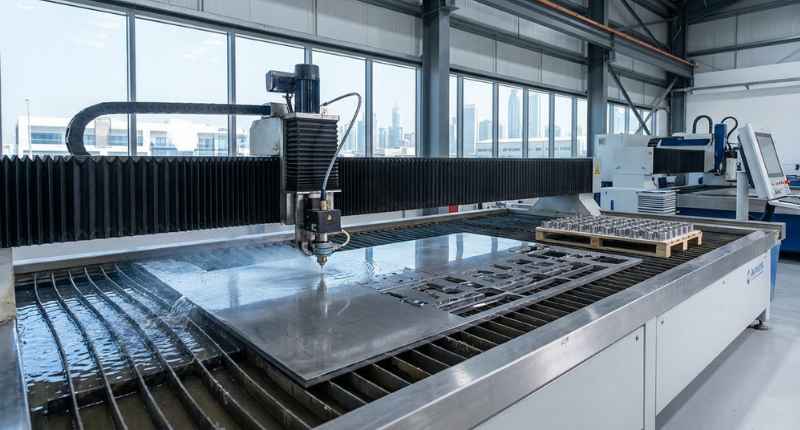
The best result depends on more than the cutting machine. It also requires correct drawings, material knowledge, fabrication planning, and quality control.
From oil and gas components to construction brackets and architectural profiles, waterjet cutting applications in industries give UAE businesses a flexible way to handle demanding cutting work. Cold cutting, broad material capability, and complex profile cutting make the process valuable when heat effects or difficult shapes are concerns.
Need Reliable Waterjet Cutting in the UAE? Contact Brightsun today to discuss your waterjet cutting requirements and request a quote.
1. What are the main waterjet cutting applications in industries?
They include cutting flanges, brackets, base plates, machine parts, panels, gaskets, stone profiles, custom components, and prototypes.
2. What are common industrial waterjet cutting use cases UAE companies need?
Industrial waterjet cutting use cases UAE companies may need include oil and gas parts, construction plates, architectural profiles, equipment components, and custom fabrication work.
3. Is waterjet suitable for oil and gas parts?
Yes. It can be useful for suitable flange blanks, mounting plates, supports, custom profiles, and other components where cold cutting is beneficial.
4. Can waterjet cut thick metal?
Yes. Capacity depends on the machine and material. Brightsun states that its system can cut material up to 150 mm thick.
5. Does waterjet create a heat-affected zone?
Abrasive waterjet is classed as a cold machining process and avoids the heat-affected zone associated with thermal cutting.
6. Can waterjet cut stainless steel?
Yes. Abrasive waterjet is widely used to cut stainless steel and many other metals.
7. Is waterjet useful in construction?
Yes. It can produce brackets, plates, panels, architectural shapes, covers, and other custom parts.
8. Is waterjet always better than laser cutting?
No. The right process depends on material, thickness, required speed, edge condition, detail, and cost.
9. What files should I provide for waterjet cutting?
A CAD file or clear technical drawing is ideal. Also provide material, thickness, quantity, tolerance, and finish requirements.
10. Why use waterjet for custom fabrication?
It can cut complex profiles without dedicated profile tooling and works across many materials, making it useful for prototypes, one-off parts, and custom production.
At a Glance
Related Blogs

Shed No. 10, Fresh Express Warehouse,
Road B1, Dubai Investments Park 1,
Dubai, UAE.
+971 43807099
+971 563244963
+971 503226480