- +971 43807099
- +971 563244963
- brisunco@emirates.net.ae

- Meet Us
Shed No. 10,
Fresh Express Warehouse, Road B1, DIP 1,
Dubai, UAE.
Shed No. 10,
Fresh Express Warehouse, Road B1, DIP 1,
Dubai, UAE.
New
New
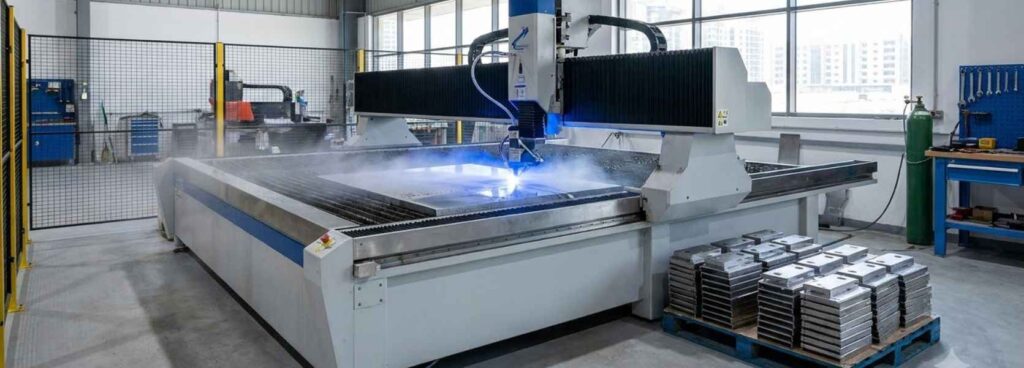
What if you need 10 precise parts, not 10,000? Small industrial orders can become expensive when setup, material waste, finishing, and production time are not controlled. Cost-effective waterjet cutting small batch production offers a practical answer.
Brightsun helps UAE businesses produce custom profiles, prototypes, replacement parts, and short production runs without making low-volume jobs needlessly complex. Waterjet technology can cut many materials and detailed shapes while avoiding heat at the cutting edge. This cold-cutting advantage becomes particularly important when the material’s properties at the cut edge must be preserved; learn more about waterjet cutting with no heat-affected zone. Better planning can also improve material use. This guide explains how the process works, where costs come from, and what to consider before requesting a small-batch cutting quote.
At a Glance
Small-batch production is common in maintenance, product testing, engineering, construction, oil and gas, and custom fabrication. The buyer may need one prototype today and 20 revised parts later.
That flexibility is where cost-effective waterjet cutting small batch work becomes useful.
Unlike a process that needs a dedicated cutting die for a new profile, waterjet cutting follows a programmed path. Technical manufacturing guidance notes that waterjet cutting can be suitable even for single parts because shape-specific tooling is not required. It is also used for low and medium production volumes.
This can make it useful for:
Brightsun offers waterjet cutting, machining, bending, welding, and fabrication from its Dubai workshop.
For a broader look at industrial applications, waterjet cutting applications in industries include oil and gas components, construction parts, architectural profiles, and custom fabrication work.
A cheap cutting rate does not always mean a cheap finished part. Buyers should look at the total job cost.
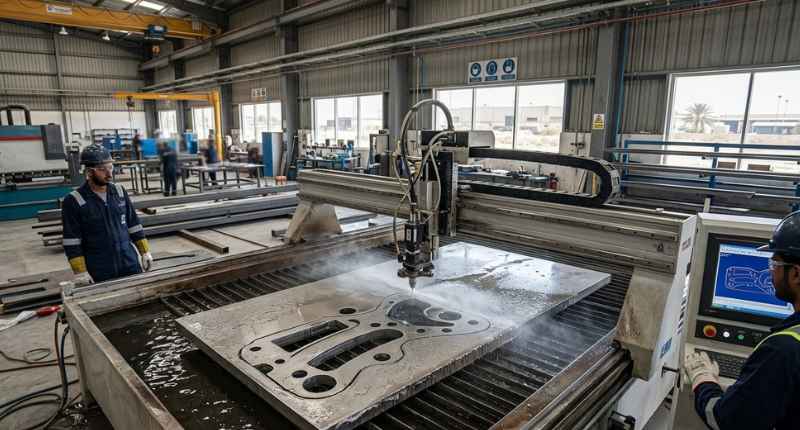
With cost-effective waterjet cutting small batch planning, cost control starts before the machine begins cutting. Part layout, material thickness, cut length, quantity, edge needs, and drawing quality all matter.
A good layout can place several components efficiently on one sheet. This process is called nesting. Proper waterjet nesting can improve material use and reduce scrap, although spacing, kerf, pierce points, and cutting order still need to be considered.
For small orders, this matters because wasting part of an expensive stainless steel or aluminium plate can quickly increase the cost per component.
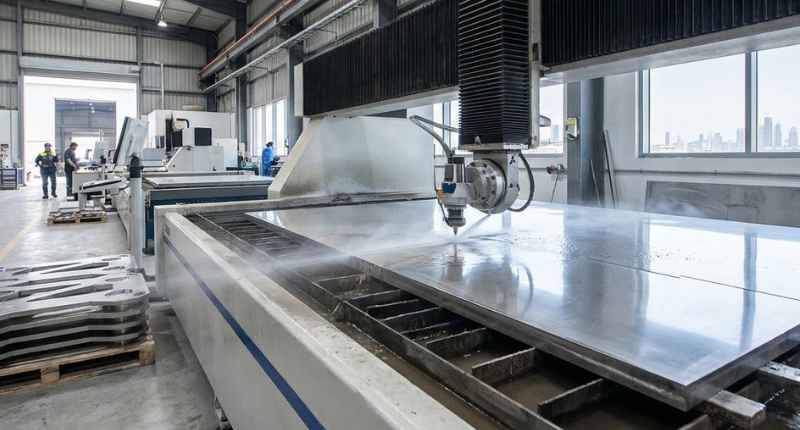
Industrial demand does not always arrive in large batches. A maintenance team may need two replacement plates. An engineering company may need five test components. A fabricator may need a short run for a custom assembly.
Waterjet cutting for small orders UAE projects gives these buyers another option between manual fabrication and high-volume production.
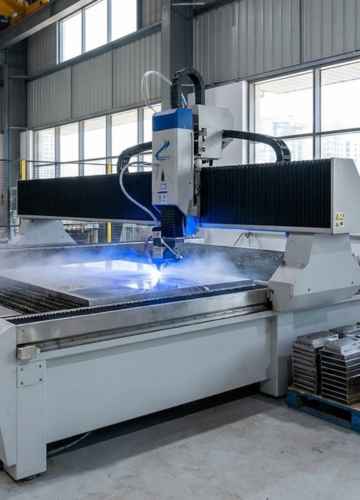
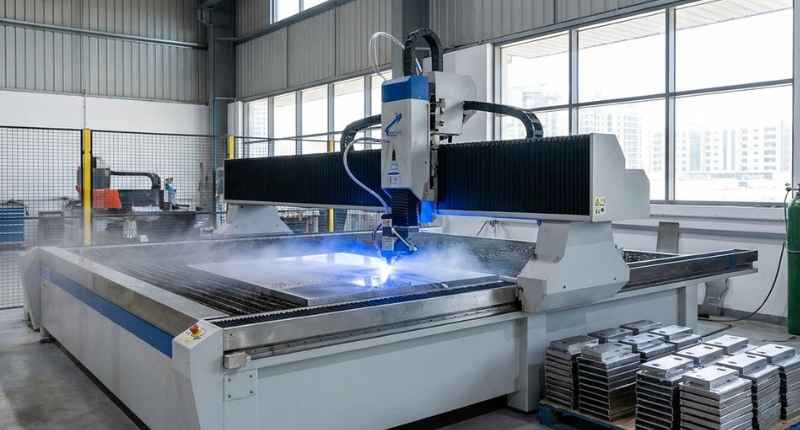
Brightsun’s waterjet cutting facility has a listed bed size of 3 m × 2 m. The company states that it processes metals, plastics, wood, and fibres, with a maximum cutting thickness of 150 mm.
For thicker small-batch requirements, it is also important to understand the process limitations, cut quality, and material-specific capabilities explained in our guide to waterjet cutting thick metal plates.
Project Requirement | How Waterjet Cutting Can Help |
Prototype | Produce a physical part from a digital profile |
Replacement component | Make a limited quantity without a large production run |
Complex shape | Follow curves and detailed programmed paths |
Heat-sensitive part | Cut without a heat-affected zone |
Thick section | Process thicker materials within machine capability |
Expensive material | Use planned nesting to help control waste |
Design revision | Update the cutting file for the next batch |
This flexibility makes waterjet cutting for small orders UAE useful when the quantity is low but part quality still matters.
Material choice affects both performance and price. Before requesting a quote, buyers should know the material grade and thickness whenever possible.
Waterjet technology can process a wide range of materials. A general technical guide to waterjet cutting lists metals, plastics, glass, ceramics, composites, and wood among common applications.
Brightsun specifically lists metals, plastics, wood, and fibres under its waterjet capabilities. Its broader workshop works with materials including mild steel, stainless steel, aluminium, brass, bronze, copper, nylon, Teflon, and Super Duplex.
For buyers considering waterjet cutting for small orders UAE, confirm material compatibility with the workshop rather than assuming every material requires the same cutting setup.
Brightsun also provides conventional machining services, which can support projects that need further operations after profile cutting.
There is no reliable flat price for every waterjet job. Two parts of the same size may have very different cutting costs.
The overall cost can also depend on whether waterjet or another cutting technology is better suited to the material, thickness, and production volume; compare waterjet cutting vs laser cutting for industrial use before choosing the process.
The main cost factors are:
Cutting speed also affects edge quality. Technical guidance on waterjet accuracy and tolerance explains that faster cutting can increase visible striations, while tighter requirements may call for slower, more controlled cutting.
A clear RFQ can save emails, reduce assumptions, and help a supplier prepare a more useful quote.
For a cost-effective waterjet cutting small batch enquiry, provide:
For waterjet cutting for small orders UAE, also state whether you will provide the raw material or expect the workshop to source it.
If your component needs more work after cutting, review Brightsun’s guide to machining and fabrication services to understand how the processes differ.
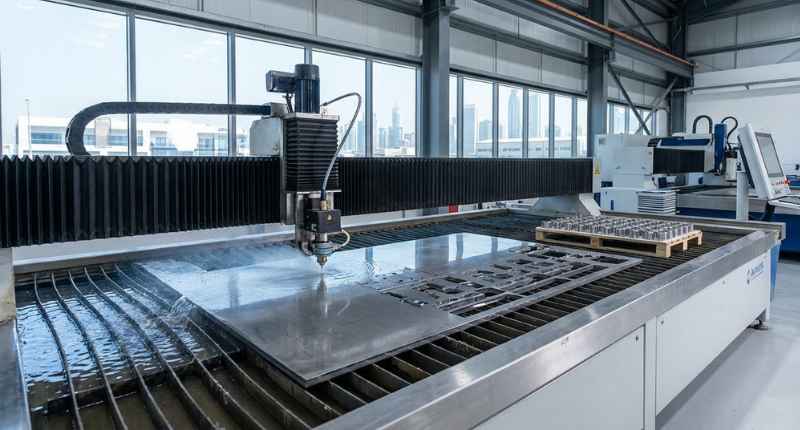
For a broader look at the practical advantages of the technology across industrial applications, explore the benefits of waterjet cutting for industrial projects.
Buyers can learn more about the company’s engineering and fabrication experience, review its quality-focused fabrication process, or explore industrial fabrication resources.
A small order should be planned around what the project actually needs. Cost-effective waterjet cutting small batch production can be a strong option for prototypes, replacement components, custom profiles, and short industrial runs.
Have a small-batch requirement? Contact Brightsun with your drawing and specifications to request a project-based quote.
Cost-effective waterjet cutting small batch production involves applying waterjet cutting to low-volume parts whilst managing how the material is used, setup, cutting time, quality requirements, and additional processing. It fits a wide range of prototypes, replacement parts, and short production runs.
Yes, it can be. Waterjet is programmed with a cutting path and does not require a specific die to cut each shape. This may render one-off and extremely small orders viable, depending on the material and design.
Waterjet technology has the capability of cutting numerous materials such as metals, plastics, composites, glass, ceramics and wood. This is to ensure that a workshop capability is always checked prior to ordering.
4. Why choose cost-effective waterjet cutting small batch for prototypes?
Cost-effective waterjet cutting small batch production lets a business make a limited number of parts for testing. If the design changes, the cutting file can be updated before the next run.
5. Is waterjet cutting for small orders UAE suitable for replacement parts?
Yes. Waterjet cutting for small orders UAE can be useful for custom replacement profiles when only a few components are needed. The original drawing or an accurate CAD file helps the supplier assess the job.
6. Does waterjet cutting create a heat-affected zone?
Waterjet is a cold-cutting process and does not create the heat-affected zone associated with thermal cutting methods.
7. Can waterjet cutting produce accurate parts?
Yes, but finished accuracy depends on the machine, material, thickness, cutting speed, setup, and required edge quality. Buyers should state the required tolerance rather than simply asking for the “highest accuracy.”
8. How can I reduce the cost of a small waterjet order?
Provide a clean drawing, specify only the tolerances you actually need, confirm the material and thickness, and allow efficient part nesting where possible. Avoiding unnecessary complexity can also help control production time.
9. What drawing format should I provide?
A workshop may accept common CAD or technical drawing formats, but accepted file types should be confirmed before sending the RFQ. Include dimensions and important tolerances even when providing a digital cutting file.
10. Where can I request waterjet cutting for small orders UAE?
Businesses can send their drawings and project requirements through Brightsun’s contact and quotation page. Include quantity, material, thickness, dimensions, and any additional fabrication requirements to support a clearer quote.
At a Glance
Related Blogs

Shed No. 10, Fresh Express Warehouse,
Road B1, Dubai Investments Park 1,
Dubai, UAE.
+971 43807099
+971 563244963
+971 503226480