- +971 43807099
- +971 563244963
- brisunco@emirates.net.ae

- Meet Us
Shed No. 10,
Fresh Express Warehouse, Road B1, DIP 1,
Dubai, UAE.
Shed No. 10,
Fresh Express Warehouse, Road B1, DIP 1,
Dubai, UAE.
New
New
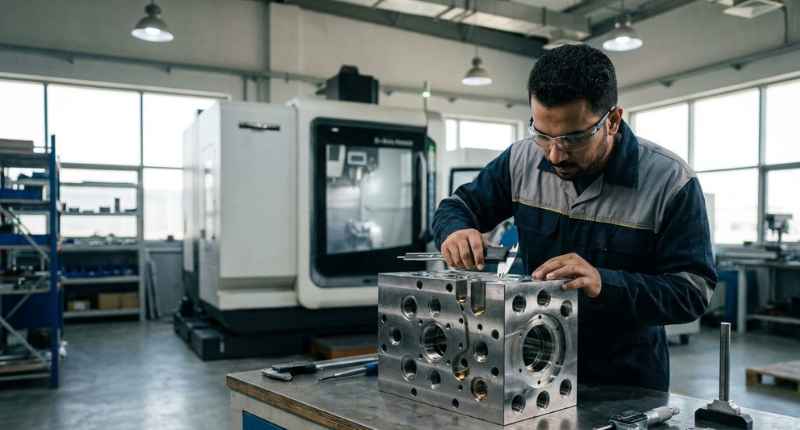
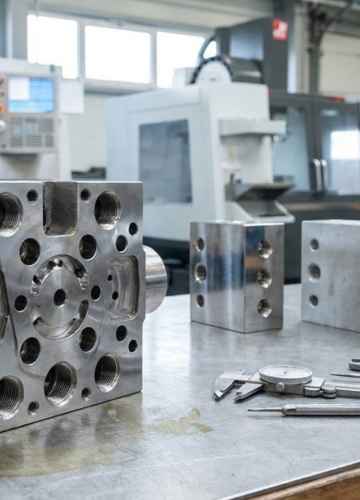
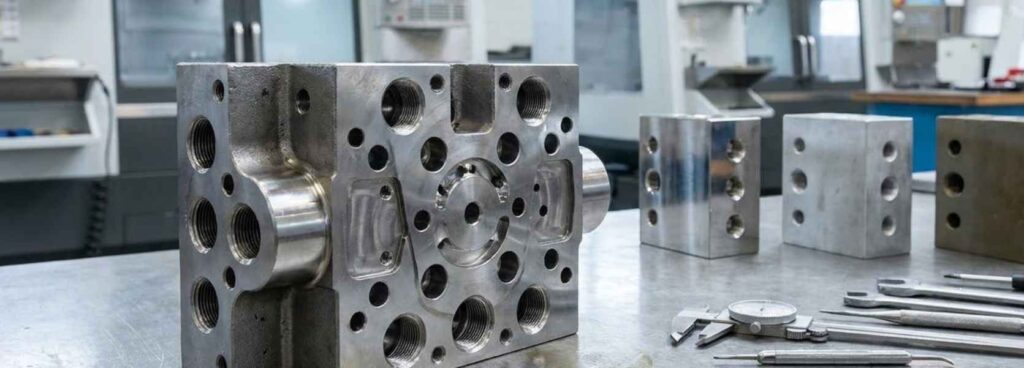
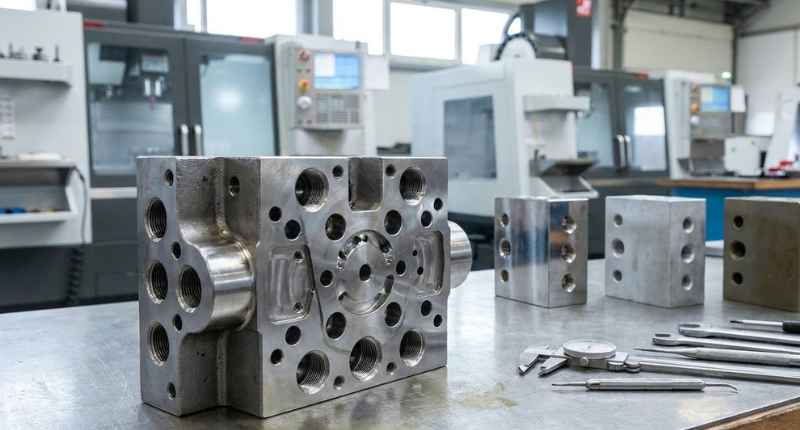
A manifold may seem like a simple metal block, but the material used to make it matters. The wrong choice can cause corrosion, increase weight, wear out faster, or reduce the manifold’s working life. This is why materials used in manifold manufacturing need to be carefully considered before machining begins.
At Brightsun Industries, the material is selected based on where and how the manifold will be used. Pressure, fluid type, temperature, weight, location, and working conditions are all taken into account. In the UAE, there are a few more things to consider, including high temperatures, coastal conditions, industrial environments, and the tough demands of oil and gas applications.
This guide looks at steel, stainless steel, aluminium, and other alloys to help buyers understand the differences and choose the right material for their needs.
At a Glance
A manifold routes fluid or gas between several ports. Its body must hold threads, keep its shape, resist leaks, and handle repeated operating loads.
Choosing the right material can improve:
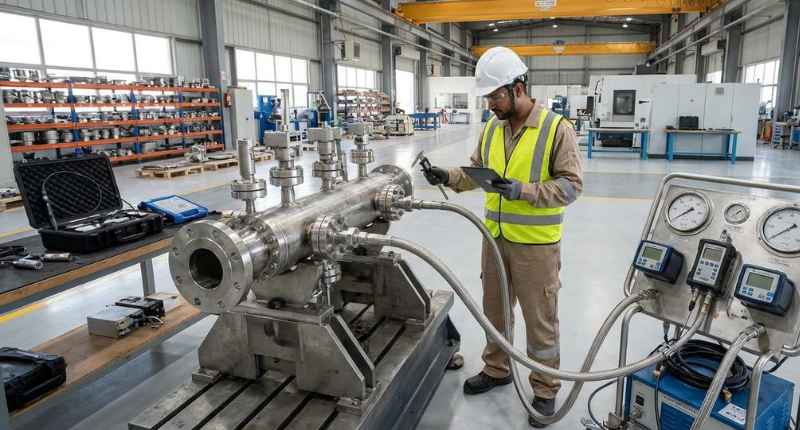
Brightsun manufactures custom industrial manifolds with inlet, outlet, and instrumentation ports. Stainless and carbon steel options are available, with leak-proof welding and pressure-testing capability.
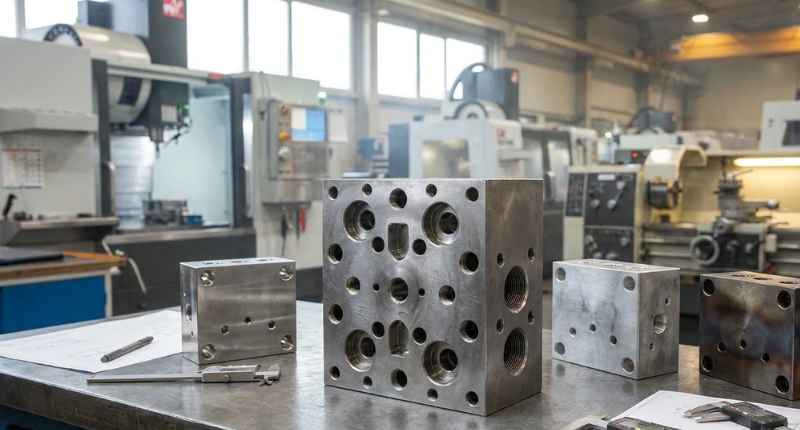
There is no single best material for every manifold. Each option offers a different balance of strength, weight, corrosion resistance, machining, and cost.
Understanding material properties is only one part of producing a reliable manifold. Learn more about the hydraulic manifold manufacturing process, including design planning, CNC machining, deburring, inspection, and pressure testing.
Material | Main benefit | Main limitation | Common use |
Carbon steel | Strong and cost-effective | May need corrosion protection | Heavy industrial systems |
Stainless steel | High corrosion resistance | Higher cost and harder machining | Marine, chemical, oil and gas |
Aluminum | Light and easy to machine | Lower strength than many steels | Mobile and compact systems |
4140 alloy steel | High strength and toughness | Heavy; may need protection | High-load applications |
Carbon steel is widely used when strength, stiffness, and value matter. It works well for industrial equipment where low weight is not the main goal.
For buyers comparing materials used in manifold manufacturing, carbon steel is often a practical starting point. Coatings or other surface protection may be needed when the manifold faces moisture, salt, or harsh chemicals.
Brightsun’s CNC machining guide explains how steel and other metals behave differently during precision machining.
Stainless steel is a strong choice when corrosion is a major concern. Grade 316 contains molybdenum. Depending on the 316 specification, the molybdenum range is around 2.25–3%.
This makes stainless steel worth considering during manifold block material selection UAE projects for coastal, wet, marine, and some process environments.
The final grade must still match the fluid, pressure, temperature, and site conditions.
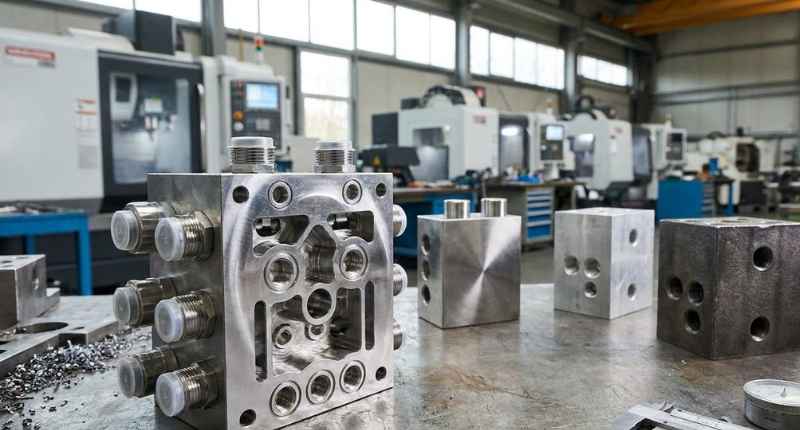
Aluminum offers one clear advantage: low weight. It is also easy to machine, which helps when a block needs many drilled passages, ports, and cavities.
It can work well in mobile machinery and compact equipment. However, aluminum should not be chosen for weight alone. Alloy grade, wall thickness, threads, pressure cycles, and temperature all matter.
During manifold block material selection UAE, the manufacturer should confirm that the chosen alloy and finished design meet the required operating and test conditions.
Alloy steel is useful when the application needs added strength, toughness, or wear resistance. A common example is AISI 4140.
ASM International’s AISI 4140 reference describes 4140 as a chromium-molybdenum, medium-carbon, through-hardening steel recommended for heavy-duty service.
Among the materials used in manifold manufacturing, alloy steel can therefore suit demanding loads and repeated duty. Heat treatment changes material properties, so the required condition should be stated clearly on drawings and purchase documents.
Material choice should follow the system requirements rather than price or habit. A cheap block is not good value if corrosion, thread damage, or leakage causes early replacement.
Material selection is an important stage of the wider manufacturing workflow. Explore our guide to the industrial manifold manufacturing process to understand how material preparation, machining, welding, finishing, and quality control contribute to a reliable industrial manifold.
For manifold block material selection UAE, check seven points:
Once the material is selected, it is equally important to verify the finished component against the required quality standards. Learn more about quality testing standards for industrial manifolds in UAE, including pressure testing, material certification, traceability, and non-destructive testing.
For hydraulic systems, ISO 4413:2010 covers general rules and safety requirements for hydraulic systems and components, including design, construction, installation, maintenance, and reliable operation.
UAE applications range from factories and construction equipment to marine, energy, and oil and gas projects. The same metal will not suit every setting.
A protected factory installation may favor carbon steel for strength and value. A wet or coastal site may make stainless steel more attractive. Mobile equipment may benefit from aluminum where the design allows it. Hard-working industrial systems may require an alloy steel.
That is why manifold block material selection UAE work should begin with drawings, media details, operating data, and site conditions.
For related material planning, Brightsun’s step-by-step CNC machining process shows how project review, setup, machining, finishing, and inspection fit together.
Before requesting a quote, give the manufacturer enough information to review the job correctly.
Share:
If the material has not been fixed, ask the manufacturer to review the application. Brightsun’s guide to choosing a metal machining company in the UAE explains why material knowledge, inspection, equipment, and technical capability should be checked together.
The best materials used in manifold manufacturing depend on what the finished manifold must handle. Carbon steel offers strength and value. Stainless steel helps manage corrosion. Aluminum cuts weight, while alloy steel supports demanding loads and repeated duty.
Brightsun Industries supports custom manifold, fabrication, and machining work for UAE industrial projects. You can also review its guide to hydraulic hoses and failure factors when planning connected hydraulic components.
Contact Brightsun with your drawing and operating requirements to discuss the right manufacturing route.
Common choices include carbon steel, stainless steel, aluminum, and alloy steel. The right material depends on pressure, media, corrosion risk, temperature, weight, and required service life.
There is no universal best choice. Stainless steel can suit corrosive settings, steel works well for demanding loads, and aluminum may suit weight-sensitive systems.
No. Stainless steel offers better corrosion resistance in many environments, but carbon steel can be a more economical choice where suitable corrosion protection is used.
Aluminum is light and machines well. It is useful where low weight matters, provided the chosen alloy and block design meet the system requirements.
It can be. 4140 is a strong chromium-molybdenum alloy steel. Final suitability depends on its condition, heat treatment, load, design, media, and environment.
Humidity, coastal salt, process chemicals, and working fluids can affect material life. Buyers should assess the real installation site rather than selecting a grade from a generic chart.
Yes. Hardness, tool wear, drilling depth, tolerances, port count, and finishing requirements can all change machining time and cost.
Testing should match the design, application, customer specification, and relevant standard. The required test method and pressure should be agreed before manufacturing.
Yes. Bodies, fittings, plugs, valves, and fasteners may use different metals. Material compatibility, sealing, and possible galvanic corrosion should be reviewed.
Send drawings, port details, pressure, media, temperature, installation conditions, quantity, material preference, and inspection needs. This gives the team a sound basis for reviewing materials used in manifold manufacturing for the project.
At a Glance
Related Blogs

Shed No. 10, Fresh Express Warehouse,
Road B1, Dubai Investments Park 1,
Dubai, UAE.
+971 43807099
+971 563244963
+971 503226480