- +971 43807099
- +971 563244963
- brisunco@emirates.net.ae

- Meet Us
Shed No. 10,
Fresh Express Warehouse, Road B1, DIP 1,
Dubai, UAE.
Shed No. 10,
Fresh Express Warehouse, Road B1, DIP 1,
Dubai, UAE.
New
New
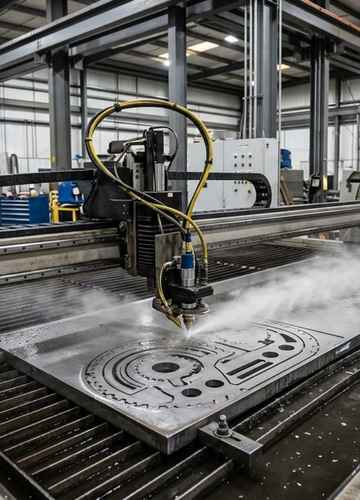
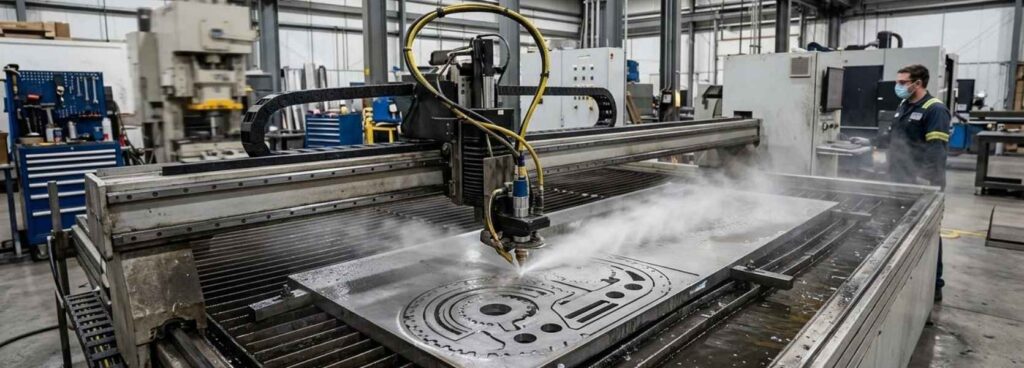
What if you could cut a thick metal plate into a complex shape without exposing its edge to cutting heat? This is one of the reasons why waterjet is now applicable in challenging industrial applications.
The benefits of waterjet cutting for industrial projects extend well beyond cutting a clean slice. The process is capable of cutting many materials and detailed shapes, minimizing material waste and extra finishing. At Brightsun, waterjet cutting facilitates projects that require consistent fabrication and accurate outcomes. This is a guide to understanding how the process works, where it contributes value, and why it can be a viable option when it comes to industrial projects in the UAE.
At a Glance
It is useful to be familiar with the mechanics of waterjet cutting before paying attention to its advantages in industrial projects. Waterjet cutting involves a very high-pressure jet of water cutting away material in accordance with a programmed cutting path.
In the case of hard material, the water is added to fine particle abrasives. The abrasive assists in cutting planes like steel, aluminum, and stone as well as in composites.
There are two common types:
Pure waterjet cutting: This is primarily used with softer materials like rubber, foam, and portions of plastics.
Abrasive waterjet cutting: This is applied to harder and thicker materials like most metals.
Research into abrasive waterjet machining and its industrial applications explains how high-speed abrasive particles remove material through erosion.
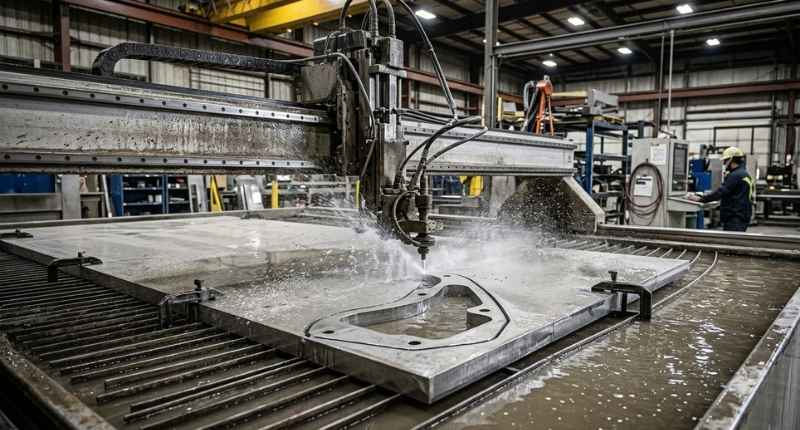
Industrial cutting affects more than the shape of a finished component. The selected process can also affect its edge, material condition, production time, waste, and later fabrication work.
The benefits of waterjet cutting for industrial projects become important when a job needs a mix of accuracy, material flexibility, and controlled cutting.
For more detail on how waterjet cutting preserves material properties by avoiding thermal effects, see No Heat-Affected Zone: Why Waterjet Cutting Preserves Material Integrity.
One of the biggest strengths of waterjet cutting is its cold-cutting process.
Laser, plasma, and flame cutting use heat. Waterjet removes material through erosion instead. As a result, it does not create the thermal heat-affected zone linked with heat-based cutting methods.
This can help reduce:
Technical guidance on cold waterjet cutting and heat-affected zones also identifies the lack of thermal distortion as an important feature of the process.
These waterjet cutting advantages UAE industries can consider are useful for jobs where protecting the original material condition is important.
A small error can create a large problem when one industrial component must fit another. This makes cutting accuracy an important part of fabrication.
Waterjet systems follow programmed cutting paths. They can produce curves, holes, slots, corners, and custom profiles from digital drawings.
The final accuracy depends on factors such as:
The benefits of waterjet cutting for industrial projects are especially clear when businesses need custom brackets, plates, machine parts, prototypes, or complex profiles.
Industrial projects do not always involve one type of metal. A workshop may need to cut stainless steel for one job, aluminium for another, and plastic or composite parts later.
Waterjet cutting offers broad material flexibility.
Depending on the machine and setup, suitable materials can include:
This flexibility is one of the strongest waterjet cutting advantages UAE industrial teams can use when working across several sectors.
Brightsun’s waterjet cutting and fabrication services support metals, plastics, wood, and fibres.
Cutting a component is often only one part of the production process. Rough edges may need grinding, cleaning, or other work before the part moves to the next stage.
A well-planned waterjet cut can produce a clean edge with little burr on many jobs.
This does not mean every part leaves the machine ready for final use. Edge quality depends on the material, thickness, cutting speed, settings, and project requirements.
Still, reducing extra edge work can save valuable workshop time. It is one of the practical benefits of waterjet cutting for industrial projects that should be considered when comparing total production costs.
Material waste can quickly increase the cost of an industrial project, especially when expensive plates or alloys are involved.
Waterjet has a narrow cutting path, often called the kerf. Digital nesting can also help place several parts efficiently across a sheet or plate.
Good nesting may allow:
Technical information on waterjet cutting for metal applications notes that narrow kerfs can support close part nesting and efficient material use.
Lower waste is another reason the benefits of waterjet cutting for industrial projects can affect more than cutting quality.
Thick material can create challenges for some cutting processes. Abrasive waterjet is often considered when a project involves heavy plate or other thick materials.
The practical thickness depends on the material, machine, required edge quality, tolerance, and acceptable cutting time.
Brightsun states that its waterjet facility can support material thicknesses of up to 150 mm, depending on the job requirements.
This makes thick-material capability one of the important waterjet cutting advantages UAE companies may consider for heavy engineering and fabrication work.
For a detailed breakdown of the capabilities and limits of waterjet cutting on thick metal plates, see waterjet cutting for thick metal plates.
Not every industrial component is a simple square or circle. Some projects need curves, internal openings, unusual profiles, or custom patterns.
Waterjet systems can follow digital cutting paths. A design can therefore be changed without creating a dedicated profile-cutting tool for every new shape.
This can be useful for:
This design freedom is one of the benefits of waterjet cutting for industrial projects that require custom work.
There is no single cutting method that is best for every project. The right choice depends on material, thickness, quality, quantity, budget, and required lead time.
Here is a simple comparison.
Factor | Waterjet Cutting | Laser Cutting | Plasma Cutting |
Cutting process | Cold erosion | Thermal | Thermal |
Heat-affected zone | No thermal HAZ | Possible | Possible |
Material range | Very broad | Depends on material/system | Mainly conductive metals |
Thick material cutting | Strong capability | Depends on system | Strong for many metals |
Detailed profiles | Very good | Excellent for suitable jobs | Good for general profiles |
Edge cleanup | Often limited | Often limited | May need more cleanup |
Custom shapes | Very flexible | Very flexible | Flexible |
Typical strength | Mixed materials and heat-sensitive work | Fast precision sheet cutting | Fast general metal cutting |
An industry comparison of waterjet with other cutting processes also highlights broad material compatibility and cold cutting as key differences.
Laser cutting can be very fast and accurate. It is often well suited to thin and medium sheet work when the material is suitable for the laser system.
Waterjet becomes attractive when heat must be avoided or the project uses materials less suited to thermal cutting.
The benefits of waterjet cutting for industrial projects should therefore be considered against the actual material and job, rather than assuming one technology is always better.
Plasma cutting is widely used for metal fabrication. It can cut suitable metal quickly and can be cost-effective for many general fabrication jobs.
However, plasma is a thermal process and is used mainly with electrically conductive materials.
Waterjet avoids thermal cutting and handles a much wider material range. These are valuable waterjet cutting advantages UAE project teams may consider when material flexibility or edge condition is important.
The waterjet cutting advantages UAE industries gain make the process useful across many demanding projects. Its clean cutting, material flexibility, and ability to create custom shapes support several key sectors.
Waterjet cutting is useful for custom plates, brackets, seals, and metal components. Cold cutting also helps avoid heat-related changes around the cut.
It can create custom metal panels, plates, stone shapes, and decorative parts. Digital cutting also makes complex designs easier to produce.
Waterjet can cut metals, plastics, composites, and other suitable materials. This flexibility supports custom and replacement parts for varied engineering needs.
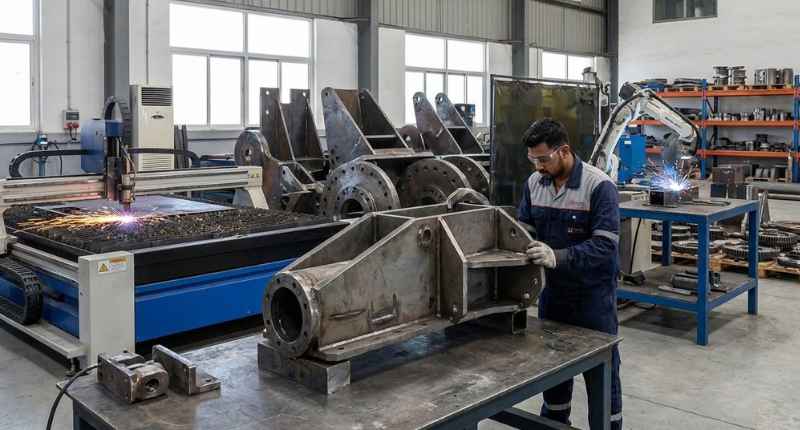
Manufacturers can use waterjet cutting for brackets, flanges, machine parts, guards, prototypes, and custom profiles before further machining or fabrication.
Brightsun provides industrial machining and fabrication solutions for a range of project needs.
The cheapest cutting price does not always mean the lowest total project cost.
Waterjet is not automatically the most affordable choice for every component. Its cost depends on material, thickness, cut length, quantity, edge quality, abrasive use, and machine time.
However, businesses should also consider what happens after the cut.
Possible savings may come from:
These cost considerations are particularly relevant when producing prototypes, replacement components, or short runs, as explained in cost-effective waterjet cutting for small batch orders.
These benefits of waterjet cutting for industrial projects can help control hidden production costs that may not appear in the initial cutting price.
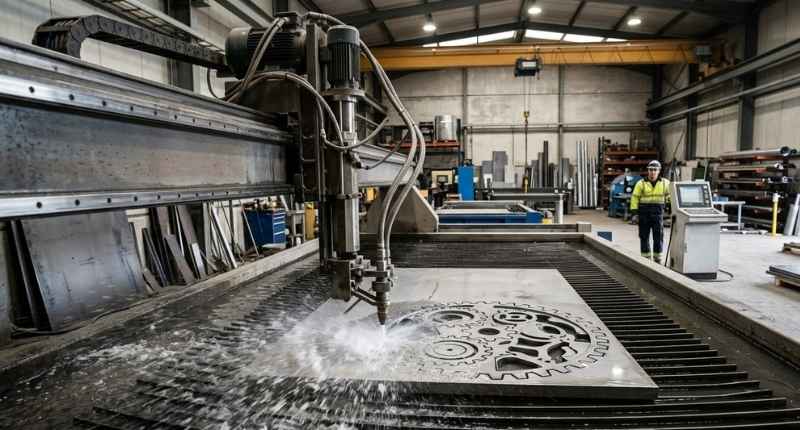
A good fabrication decision starts with the job requirements rather than the machine.
Waterjet deserves consideration when your project needs a combination of material flexibility, custom shapes, thick-section capability, and cold cutting.
These waterjet cutting advantages UAE buyers can compare against speed, cost, tolerance, and later fabrication needs.
Good results start before cutting begins. Clear information helps the fabrication team choose the right process and prepare a reliable quote.
Before sending your project, prepare:
Good planning helps turn the benefits of waterjet cutting for industrial projects into real production value.
Brightsun offers reliable waterjet cutting backed by wider machining and fabrication capabilities. This helps industrial projects move smoothly from cutting to further production work.
These capabilities help businesses gain the benefits of waterjet cutting for industrial projects while keeping different fabrication needs under one roof.
Clients can also access machining, steel fabrication and related engineering services for projects that require further work after cutting.
Turn your designs into accurate, clean-cut components with Brightsun. From custom profiles to thick materials and complex industrial parts, our team is ready to support your project.
1. What are the main benefits of waterjet cutting for industrial projects?
The main benefits of waterjet cutting for industrial projects include cold cutting, broad material compatibility, detailed shape cutting, thick-material capability, narrow kerf, and reduced heat-related damage. It may also lower the need for secondary edge finishing on suitable jobs.
2. What are the key waterjet cutting advantages UAE companies should consider?
The main waterjet cutting advantages UAE businesses should consider include the ability to cut many materials, avoid thermal heat effects, create custom profiles, process thick sections, and support industrial sectors such as manufacturing, marine, construction, engineering, and oil and gas.
3. Does waterjet cutting cause heat damage?
Waterjet cutting is a cold-cutting process. It removes material using a high-speed water stream, often combined with abrasive particles. As a result, it does not create the thermal heat-affected zone associated with processes such as laser, plasma, and flame cutting.
4. Can waterjet cutting handle thick metal?
Yes. Abrasive waterjet can cut thick metal. The practical thickness depends on the machine, material, cutting speed, tolerance, and required edge quality. Brightsun states that its waterjet facility supports material thicknesses up to 150 mm, subject to project requirements.
5. Which materials can be cut with a waterjet?
Waterjet systems can cut many materials, including steel, stainless steel, aluminium, copper, brass, plastics, rubber, composites, stone, glass, wood, and fibres. The exact method depends on the material and thickness.
6. Is waterjet better than laser cutting?
It depends on the job. Laser can offer excellent speed and precision for suitable sheet materials. Waterjet has an advantage when cutting heat must be avoided, when thick sections are involved, or when the project includes a wider mix of materials.
7. Is waterjet cutting suitable for complex shapes?
Yes. Waterjet machines follow programmed cutting paths, allowing them to produce curves, holes, slots, and custom two-dimensional profiles. This makes the process useful for prototypes, replacement components, and custom industrial parts.
8. Does waterjet cutting reduce material waste?
It can. Waterjet produces a relatively narrow kerf, and digital nesting can place suitable parts close together on a sheet or plate. Better material use can be valuable when working with costly metals and alloys.
9. Are waterjet cutting advantages UAE projects limited to metal?
No. One of the useful waterjet cutting advantages UAE projects can gain is broad material compatibility. Depending on the equipment, waterjet can process metals as well as materials such as plastics, rubber, stone, glass, composites, wood, and fibres.
10. What information should I provide for a waterjet cutting quote?
Provide the material type, grade, thickness, part dimensions, quantity, drawing or CAD file, required tolerance, and edge-quality needs. You should also mention whether the parts need later machining, bending, welding, or fabrication.
At a Glance
Related Blogs

Shed No. 10, Fresh Express Warehouse,
Road B1, Dubai Investments Park 1,
Dubai, UAE.
+971 43807099
+971 563244963
+971 503226480