- +971 43807099
- +971 563244963
- brisunco@emirates.net.ae

- Meet Us
Shed No. 10,
Fresh Express Warehouse, Road B1, DIP 1,
Dubai, UAE.
Shed No. 10,
Fresh Express Warehouse, Road B1, DIP 1,
Dubai, UAE.
New
New
A single unplanned breakdown can cost a Dubai factory more in one night than an entire year of upkeep. It doesn’t wait around for a good time, a broken shaft, a cracked weld, or a burst hose fitting. It occurs while on shift, and every hour the line is idle, the money bill is added on, and one could’ve just averted it in the beginning. It’s the actual cost of waiting until it’s broken.
Preventive maintenance fabrication turns that equation around. When a part fails, instead of paying a large premium, you pay a portion of that premium regularly prior to the time of failure. The savings aren’t just theoretical. They become evident when you compare the numbers of completed and planned repair work.
At Brightsun Industries, we have spent close to two decades helping UAE factories make this exact shift, and the cost data backs it up. Here, we break down the true cost difference between planned and emergency fabrication. We will review parts, work, and downtime so you can decide what’s best for your manufacturing facility’s flooring.
At a Glance
Preventive maintenance fabrication involves identifying repair and replacement work and scheduling it on a predetermined schedule before they actually break down. No waiting for a pipe to burst or a bracket to snap; rather, players replace worn parts according to a calendar of their choice.
Emergency fabrication only happens after something has already broken down. It runs on the supplier’s schedule, not yours, and that is exactly why it costs more.
The majority of Dubai factories have close production targets. The working hours that are not used due to unplanned downtime can cause an entire week’s delivery plan to get thrown off course. That’s why the planned fabrication services that UAE factories provide are designed to prevent this type of problem before it even occurs.
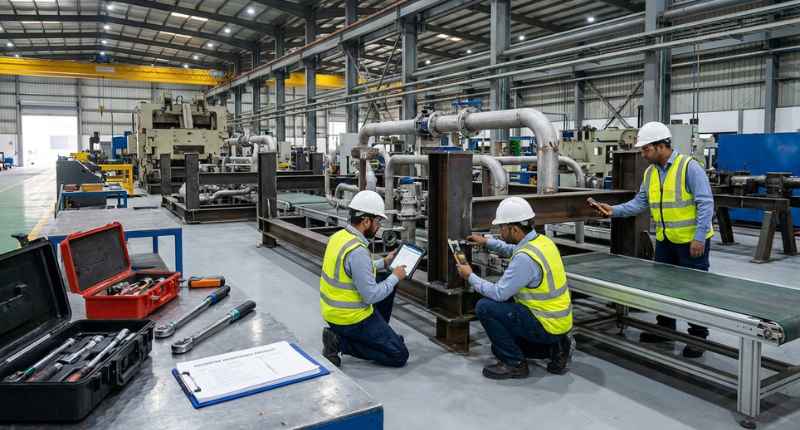
The difference between the cost of reactive repairs vs planned repairs is a lot. When you stack up emergency vs preventive costs side by side, the gap is hard to ignore. Reactive maintenance always costs between 3x and 5x more per repair than planned preventive maintenance, finds Fabrico’s research.
This is a difference that accumulates through several little charges – emergency parts, overtime labor, loss of production, and hidden damage. Often, this damage is cumulative and goes unnoticed until failure occurs.
Do you have a part that shows no warning signs of failure? If so, you cannot use normal delivery services. When emergencies arise, the costs of the same spares are 2-4 times higher than normal. This applies whether they come through rush shipping or premium suppliers.
This additional expense is before any payroll and downtime have been applied to the invoice. Emergency fabrication also entails overtime hours and the urgent borrowing of crews from other jobs at short notice. Planned work is carried out at off-peak times and using your normal staff, at normal rates.
Most cost listings don’t include downtime as an item, but it is the biggest loss. The average unplanned downtime cost across all industrial sectors is estimated to be around $260,000 per hour. Few Dubai factories operate at that scale. But the principle holds at any size: every idle hour on the line is revenue you do not get back.
It is not going in the right direction for factories that remain responsive. According to the Siemens True Cost of Downtime report, today’s collective losses to unplanned downtime cost Fortune Global 500 manufacturers $1.4 trillion a year. That is equivalent to 11 percent of overall revenue, compared with eight percent a few years ago.
The table below lays out emergency vs preventive costs across the factors that matter most on a factory floor.
Cost Factor | Preventive Fabrication | Emergency Fabrication |
Parts sourcing | Standard, regular pricing | 2-4x standard price |
Labor | Scheduled, regular rates | Overtime and rush-crew rates |
Downtime | Planned, minimal | Unplanned, often extensive |
Budget impact | Predictable, easy to forecast | Unpredictable, can spike sharply |
Equipment lifespan | Extended through regular care | Shortened by repeated stress and delay |
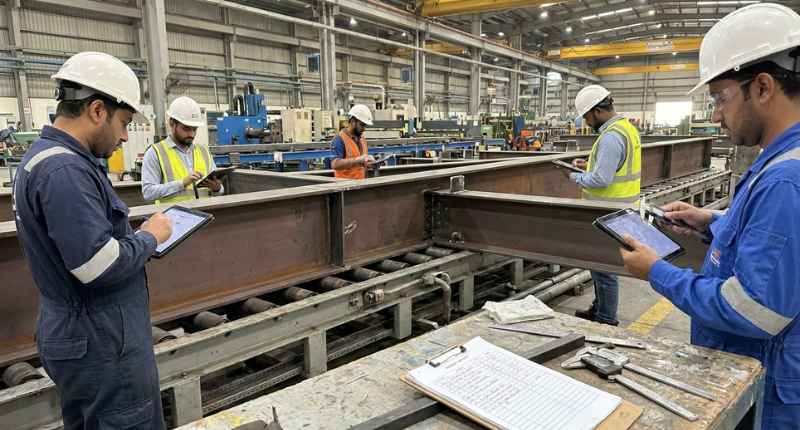
A good maintenance scheduling plan can do more than just avoid breakdowns. Reduces the plant’s life cycle costs and maintains consistent production output.
For a factory with several production lines, this predictability is worth more than the sum of its maintenance budget.
Cost-benefit research on maintenance strategy backs this up: predictable, scheduled spending consistently supports better financial planning than the unpredictable spikes that come with reactive repairs.
Scheduled inspections can also identify early frame distortion before it leads to costly structural failures. Read Bent Frame Straightening & Repair: Heavy Equipment Back in Operation in 72 Hours to learn how damaged equipment frames are professionally restored.
Preventive maintenance also helps identify worn gears before they fail completely. Learn how Gear Manufacturing Dubai: When the Part No Longer Exists uses reverse engineering to manufacture obsolete gears and reduce costly production delays.
Not all components require a preventive schedule. Several low-value items do not pose any safety concern and can be easily and rapidly replaced at a low cost. This includes office lights or straightforward, not crucial lighting fixtures. Sometimes it is best to let these run to failure.
The line is drawn in accordance with the significance of the part. If a part fault impacts production, poses a safety risk, or harms other equipment, it should be on a planned maintenance schedule. When it fails quietly and has no significant impact, it may be more cost-effective to replace it.
Preparing to shift from reactive repairs to a planned, scheduled approach? Discuss a plan with the Brightsun Industries people for fabricating around your factory. Check out our products and services section to get started.
Preventive maintenance fabrication is scheduled repair and replacement work carried out on a fixed timetable, before a part fails. Emergency fabrication is, of course, post-breakdown and typically is done under a time constraint.
Industry data on emergency vs preventive costs is clear. Reactive repairs are likely to cost 3 to 5 times as much as planned preventive work.
Across the industrial sectors, people come up with an average price of $260,000 per hour for unplanned downtime. So even a few hours of unscheduled downtime can be more expensive than years of scheduled downtime.
Yes. Preventive maintenance fabrication is advantageous in any sized production facility; one downed production line can disrupt delivery timelines and customer trust.
Maintenance scheduling involves using set times for equipment inspection and replacement. These times are determined by manufacturer advice, operating hours, and previous experience of failure, not waiting for things to fail.
Yes. Worn or damaged parts are a frequent cause of accidents at work, and preventive maintenance fabrication identifies wear at an early stage, before it becomes a problem.
Some examples include structural welds, pipe and hose connections, and load-bearing brackets. Any component that, if it failed, would cause production to stop or create a safety hazard should be included in a proper fabrication planning schedule.
Yes. Reactive repair may be more practical than a predetermined maintenance schedule if there is no safety hazard and the parts are relatively inexpensive and simple to replace.
The concept of maintenance scheduling transforms repair budgets into a budgeted line item as opposed to the risk of unknown and unanticipated budget items that produce negative outcomes.
Find an ISO-certified fabrication workshop that provides planned fabrication services UAE factories can depend on. Select one that has experience in your field (oil and gas, marine or general manufacturing). This will put them in a position to manage the creation of a schedule that suits your equipment.
At a Glance
Related Blogs

Shed No. 10, Fresh Express Warehouse,
Road B1, Dubai Investments Park 1,
Dubai, UAE.
+971 43807099
+971 563244963
+971 503226480