- +971 43807099
- +971 563244963
- brisunco@emirates.net.ae

- Meet Us
Shed No. 10,
Fresh Express Warehouse, Road B1, DIP 1,
Dubai, UAE.
Shed No. 10,
Fresh Express Warehouse, Road B1, DIP 1,
Dubai, UAE.


New
New
The production manager at a Dubai-based manufacturing facility did not have the luxury of waiting until morning. Their primary conveyor system had seized mid-shift, and with it, the entire production line had stopped. Every hour of downtime was costing the facility approximately AED 183,000 in lost output. By the time the sun came up, the number on the board was already painful.
This is not an unusual scenario in industrial Dubai. Conveyor systems run hard, often around the clock, and when they fail, they do not fail at convenient times. What matters in that moment is not who has the most impressive brochure. It is about who can get there fast, assess accurately, and fabricate or source what is needed without wasting time on guesswork.
This is the account of how that breakdown was resolved, and what it took to get that line running again within 36 hours.
At a Glance
The conveyor in question was a heavy-duty belt system used to move raw material through the first stage of the production process. When the maintenance team investigated, they found a combination of failures that had been building over time and finally reached a breaking point simultaneously.
The main drive shaft had developed a fatigue crack that propagated to a full fracture under load. A section of the conveyor frame had also buckled from repeated stress cycling, misaligning the belt path and accelerating wear on the idler rollers. Two of the drive rollers had seized completely.
The facility had no spare shaft in stock. The frame section was a non-standard fabricated profile that was not available off the shelf. And the idler rollers, while more accessible, still needed to be matched to the existing system dimensions before ordering.
This was not a maintenance task. It was an emergency fabrication and repair job.
Similar emergency situations occur when industrial piping systems develop leaks, where fast diagnosis and repair are essential to prevent production interruptions and equipment damage.
Emergency repairs are not limited to conveyor systems. Read Cracked Tank Welding Repair: Preventing Environmental Disaster in 24 Hours to see how rapid welding intervention prevented a major storage tank failure.
Structural frame damage is not limited to conveyor systems. Our guide Bent Frame Straightening & Repair: Heavy Equipment Back in Operation in 72 Hours explains how hydraulic straightening restores heavy equipment frames after impact or overload.
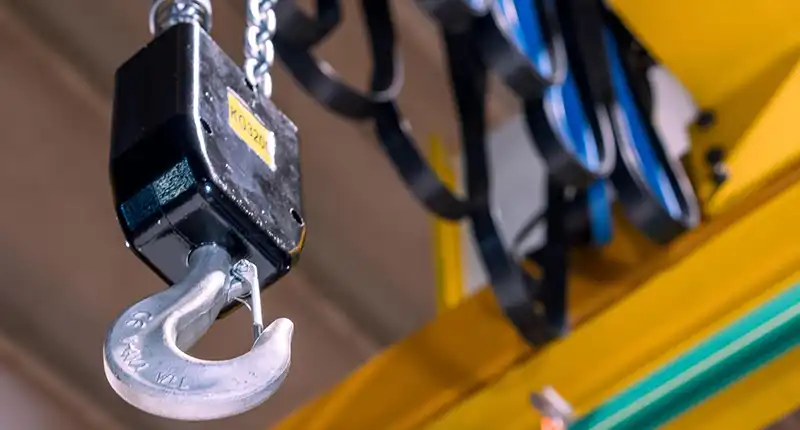
The first thing the response team did on arrival was resist the instinct to start pulling things apart. A fast but inaccurate assessment in the first hour leads to wasted fabrication time in hours six through twelve.
The team carried out a structured inspection of the full conveyor run, not just the obvious failure points. They documented the shaft dimensions, checked the frame profile against what could be reverse-engineered from the undamaged sections, measured the roller specifications, and identified every secondary component that had been damaged as a consequence of the primary failures.
This took four hours. It felt slow to the facility management team, watching the clock. It was the reason the repair was completed within the target window.
The assessment produced a clear fabrication brief: one replacement drive shaft to specification, one repair section of structural frame, and a set of matched replacement rollers. Material sourcing and fabrication could begin in parallel once the brief was confirmed.
The drive shaft was the most critical item. It needed to be fabricated from the correct material grade to handle the torsional load of the drive system, machined to tolerance at the journal and keyway locations, and ready for installation in time to allow the frame repair and roller replacement to follow in sequence.
When a conveyor breakdown involves a fractured or worn shaft, rapid replacement becomes critical to restoring production. Read our Broken Shaft Replacement: Same-Day CNC Machining & Installation in Dubai guide to learn how emergency CNC machining and on-site installation can significantly reduce downtime.
This is where emergency fabrication services differ from standard workshop scheduling. The shaft could not wait in a queue. It went straight to the floor, with a welder and machinist working through the night to produce a component that would perform under the same conditions that had destroyed the original.
The frame repair required cutting out the buckled section, fabricating a replacement section to match the original profile, and welding it back into the conveyor structure with full penetration welds and correct alignment. Alignment was checked twice during the repair sequence because a frame that is straight to the eye but misaligned by two or three millimetres will destroy a belt in days.
The rollers were the most straightforward part of the scope, but still required careful matching. A roller that is close to the right dimension but not exactly right creates uneven belt tracking, which transfers load asymmetrically and causes premature wear on one side of the belt.
Conveyor drive systems also rely on precision gears that may become unavailable over time. Our guide Gear Manufacturing Dubai: When the Part No Longer Exists explains how reverse engineering keeps ageing equipment operating without waiting for OEM parts.
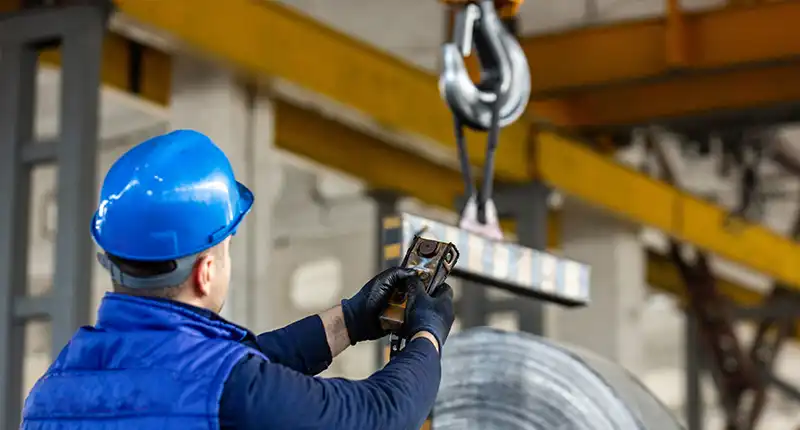
Fabricated components arrived at the facility site in stages as they were completed, which allowed the installation team to begin fitting work on the frame repair while the shaft was still being finished.
The shaft installation required careful alignment of the drive assembly, including the coupling, the bearing housings, and the drive pulley. Each element was set and checked before the next was fitted. This is not a step where speed should override precision. A shaft that is installed 0.1mm out of parallel alignment will generate vibration that progresses to bearing failure within weeks.
Once the mechanical installation was complete, the team ran the conveyor empty for a full inspection cycle before loading it. Belt tracking was checked and adjusted. The drive motor current draw was monitored to confirm the system was running within normal parameters. The temperature of the bearing housings was checked after 30 minutes of running to confirm no abnormal friction was present.
The production manager signed off on the system at hour 36. The line restarted within the same shift.
The production team was understandably focused on the immediate crisis during the repair. Once the line was running again, there was a more useful conversation to be had.
The fatigue crack in the drive shaft had not appeared overnight. The signs had been present for some time in the form of increasing vibration levels and minor misalignment that had been noted but not escalated. The frame buckling was a consequence of running with that misalignment over an extended period. One deferred maintenance decision had compounded into a multi-component failure.
The facility updated its inspection schedule to include periodic shaft and frame checks with documented measurements rather than visual observation alone. They also identified two other conveyor systems in the facility that were showing early signs of the same pattern and scheduled preventive work before either reached the same failure point.
The cost of that preventive work was a fraction of what the emergency repair had cost, which was itself a fraction of what a longer downtime would have cost.
This breakdown also highlighted the financial value of preventive maintenance. Learn how planned inspections and scheduled fabrication reduce repair costs in Preventive vs Emergency Fabrication: Cost Analysis for Dubai Factories.
Any fabrication company can produce a replacement shaft given enough time, the right drawings, and a standard workshop schedule. Conveyor repair in Dubai during emergencies is different because the constraints are different.
The material needs to be sourced at short notice or drawn from stock. The fabrication needs to happen outside normal scheduling. The team arriving on site needs to be able to assess accurately under pressure, communicate clearly with a client who is stressed and watching every hour, and make good technical decisions without the luxury of extended deliberation.
Urgent conveyor repair in the UAE response also requires experience with a wide range of conveyor types and configurations. A team that has only worked on one system type will spend valuable time figuring out what they are looking at before they can start solving the problem.
Production line repair at emergency speed is a capability that is built through experience, not claimed through a service offering. The difference becomes clear in the first few hours of a breakdown.
For broader industrial breakdown support, explore our guide on 24/7 Emergency Fabrication Services in Dubai and how businesses reduce downtime through rapid repair solutions.
A seized conveyor at 2 AM is not a fabrication problem. It is a business continuity problem that happens to require fabrication to solve it. The facilities that recover fastest are the ones working with a partner who understands both sides of that equation, who can assess without assumptions, fabricate without delay, and install without cutting corners on alignment and commissioning.
The 36-hour resolution in this case was not exceptional. It was the result of a structured process applied under pressure by a team that had done it before.
We at Brightsun Industries provide emergency fabrication services and factory breakdown services across Dubai and the UAE for production facilities that cannot afford extended downtime.
If your facility operates conveyor systems, processing lines, or fabricated structural equipment that is critical to your production output, contact Brightsun Industries to discuss emergency response arrangements before you need them.
Contact form.
How quickly can the conveyor repair Dubai emergency response be mobilized?
Response mobilization depends on location and scope, but emergency fabrication teams can typically be on site within two to four hours of a confirmed breakdown callout in Dubai and the wider UAE.
What information should a facility have ready when calling for urgent conveyor repair in the UAE?
Having the conveyor model, a description of the failure symptoms, approximate belt width, and drive motor rating, and access to any existing maintenance records will significantly speed up the initial assessment on arrival.
Can emergency fabrication services produce replacement shafts and structural components overnight?
Yes, provided the material grade is available in stock or from a nearby supplier, most standard shaft and structural frame components can be fabricated within a single overnight shift when the work is prioritized correctly.
How can production facilities reduce the risk of emergency breakdown situations on conveyor systems?
Scheduled inspections that include dimensional checks on shafts, frame alignment measurements, and bearing temperature monitoring are the most effective way to identify developing failures before they become full breakdowns.
At a Glance
Related Blogs

Shed No. 10, Fresh Express Warehouse,
Road B1, Dubai Investments Park 1,
Dubai, UAE.
+971 43807099
+971 563244963
+971 503226480