- +971 43807099
- +971 563244963
- brisunco@emirates.net.ae

- Meet Us
Shed No. 10,
Fresh Express Warehouse, Road B1, DIP 1,
Dubai, UAE.
Shed No. 10,
Fresh Express Warehouse, Road B1, DIP 1,
Dubai, UAE.
New
New
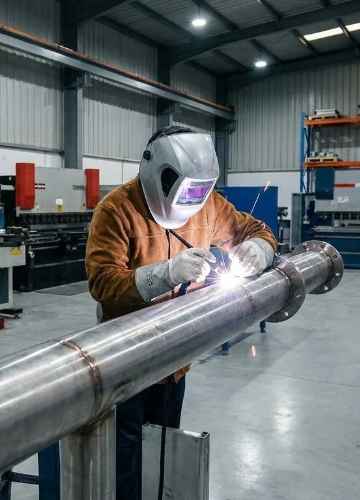
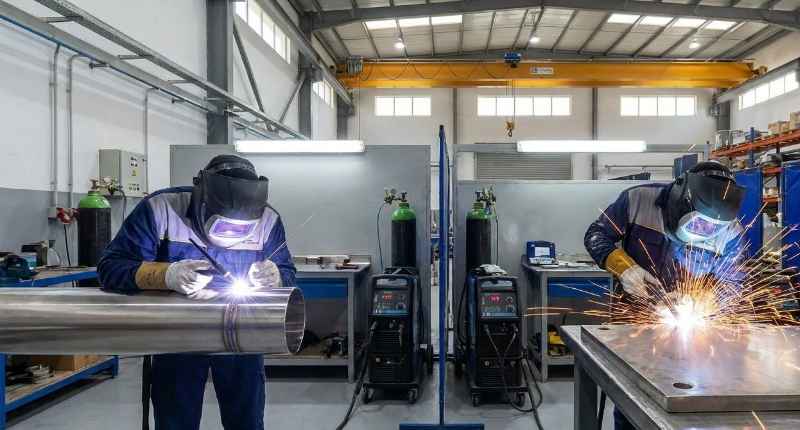
Most procurement teams ask whether a welder is certified. Fewer ask what the certification actually covers. That distinction matters more than most buyers realise until a weld fails inspection and the certification meant to prevent it turns out it didn’t cover the material grade, joint type, or welding position used.
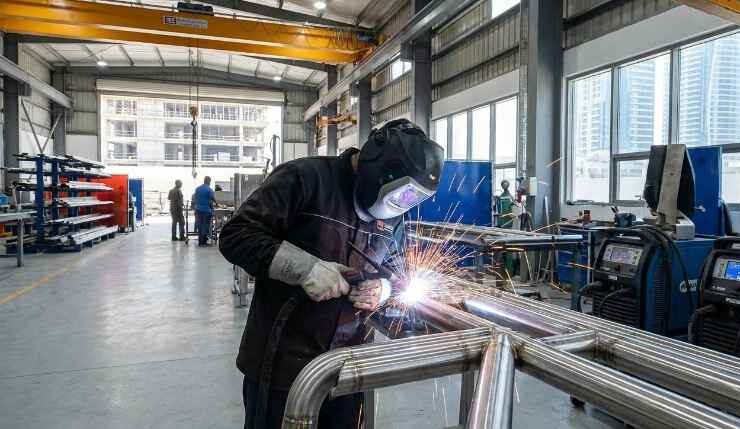
Stainless steel welding certifications UAE projects require are specific, not generic. A welder qualified for carbon steel structural work is not qualified to weld stainless steel pipe. A welder qualified for TIG on austenitic stainless is not automatically qualified for duplex stainless. Understanding what a certification covers, and what it does not, is what allows procurement managers in Dubai to ask the right questions before awarding work rather than discovering the gaps during inspection.
At a Glance
Welder qualification is not a course completion certificate. It is the result of a practical test in which a welder produces a test weld under defined conditions, and that weld is inspected and tested to confirm it meets the acceptance criteria of the applicable standard.
The qualification covers a defined range of variables. Base material group, welding process, filler material type, joint configuration, welding position, and thickness range are all essential variables that define the scope of what a qualified welder is permitted to weld in production. Change any of these variables outside the qualified range, and the welder is no longer qualified for that production weld, regardless of how long they have been welding stainless steel.
The choice of welding process also affects qualification requirements and production quality. Understanding the differences between TIG vs MIG welding for stainless steel helps project teams select the appropriate process for their material thickness, joint configuration, and quality requirements.
This is why the Welder Performance Qualification record, or WPQ, is more useful than a certification card. The WPQ shows exactly what was tested and what the qualified range covers. A certification card shows a test was passed. The WPQ shows what that test qualifies the welder to do.
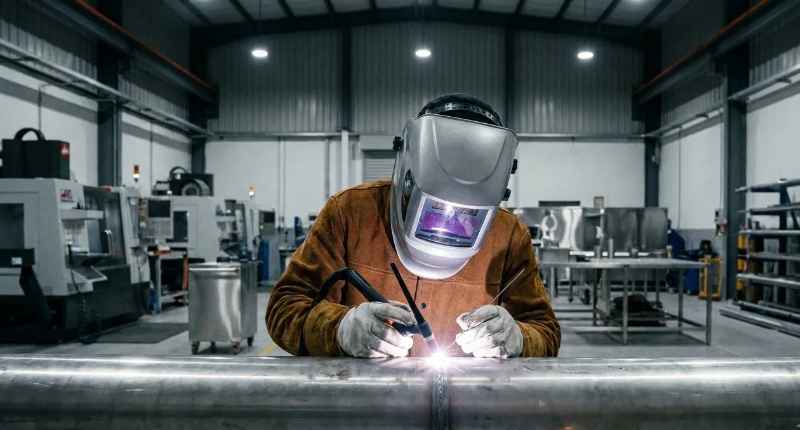
ASME Section IX is the governing standard for welder qualification on pressure equipment in the UAE, covering vessels, boilers, and piping under the ASME pressure equipment codes. For oil and gas, chemical processing, and offshore fabrication, ASME Section IX qualification is the minimum expectation for any pressure-containing stainless weld.
Under ASME Section IX, base materials are grouped by P-Number. Austenitic stainless steels, including 304 and 316, fall under P-Number 8. Duplex stainless steels fall under P-Number 10H. A welder qualified on P-Number 8 is not qualified for P-Number 10H. These are separate qualifications requiring separate test welds.
Welding positions are also separately qualified. A welder qualified in the flat position is not qualified to weld vertically or overhead. The 6G position test on a fixed pipe at 45 degrees is the most comprehensive single qualification because it covers multiple positions simultaneously and is accepted for all positions on pipe and plate within the tested thickness range.
AWS D1.6 is the structural welding code for stainless steel, covering welder qualification for structural applications outside the ASME pressure equipment codes. For marine outfitting, architectural stainless, and industrial stainless structures in the UAE, AWS D1.6 is the applicable standard.
AWS D1.6 qualifications are position-specific and joint-type-specific. A welder qualified for groove welds is not automatically qualified for fillet welds. The qualification also specifies the welding process, so a TIG qualification does not cover MIG on the same joint.
For UAE projects involving both pressure piping and structural stainless fabrication, a welder may need qualifications under both ASME Section IX and AWS D1.6 to cover the full scope of work.
For stainless welding on classed vessels and offshore structures in the UAE, classification society approval is required. Lloyd’s Register, Bureau Veritas, DNV, and ClassNK all run separate welder approval schemes. Approval by one society does not cover another.
Society approvals are valid for two years provided the welder remains active in the qualified process, confirmed by a six-monthly employer endorsement. An unapproved or lapsed approval cannot be used on classed work regardless of the welder’s other qualifications.
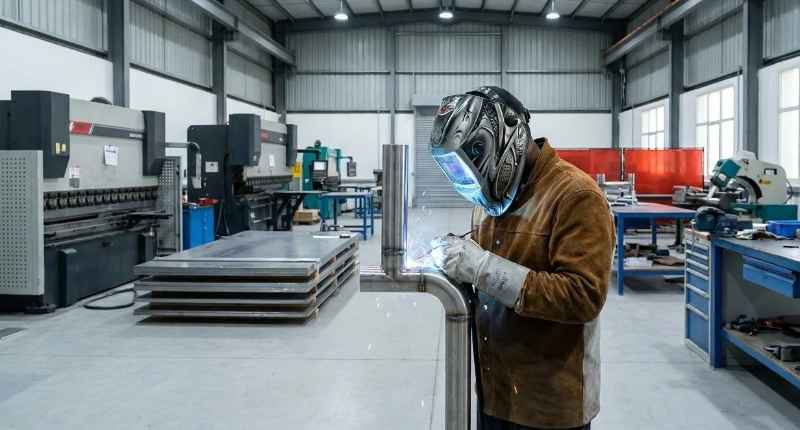
Knowing which certifications apply is only useful if procurement teams know what to request and how to check it. These are the specific steps for verifying certified welder qualifications Dubai projects require.
Request the WPQ record, not the certification card. The WPQ shows the test weld details, the essential variables covered, the thickness and diameter ranges qualified, the test results, and the qualification date.
Check qualification currency and continuity. ASME Section IX qualifications lapse if the welder has not used the qualified process within six months. Ask the fabricator to confirm that all welders assigned to your project have been continuously active in the qualified process.
Confirm material group coverage. If your project involves duplex stainless, confirm the welder holds a P-Number 10H qualification, not just P-Number 8. These are different material groups with different test requirements.
Verify position qualifications against actual production joints. A welder qualified only in the flat position cannot be assigned to vertical or overhead pipe welds. Check the position qualifications against the joint positions that will actually be encountered in fabrication.
For classification society work, request the society approval certificate and check the endorsement dates. A lapsed approval cannot be used on classed work.
Welder qualification and welding procedure qualification are separate requirements that are both necessary on stainless steel welding projects in the UAE.
A Welding Procedure Specification defines the parameters that must be followed during production welding. The WPS is qualified through a Procedure Qualification Record, or PQR, in which a test weld made to the WPS parameters is destructively tested to confirm the procedure produces welds meeting the mechanical and metallurgical requirements of the applicable standard.
A qualified welder without a qualified WPS cannot produce code-compliant work. Both are required simultaneously on every production weld. When evaluating a stainless welding contractor in Dubai, requesting both the WPS library and the WPQ records for the assigned welders gives a complete picture of whether the fabrication will be code-compliant from the first production weld.
Beyond welder qualifications and documented procedures, choosing a capable fabrication partner is equally important. Explore our guide to stainless steel welding services in Dubai to understand the technical requirements, contamination controls, filler selection, and post-weld treatments involved in professional stainless steel fabrication.
Stainless steel welding certifications UAE projects require are specific to the material group, the welding process, the joint configuration, the position, and the applicable standard. A generic welding certification answers only one question: can this welder weld? The WPQ record answers the question that matters: is this welder qualified for this specific production weld?
Procurement managers in Dubai who request WPQ records, verify qualification currency, confirm material group coverage, and match position qualifications to actual production joints avoid inspection failures that could have been prevented before the first arc was struck.
Contact Brightsun Industries to discuss your stainless steel fabrication requirements and review the qualification documentation for your project scope.
Q1: What stainless steel welding certifications do UAE oil and gas projects require?
ASME Section IX welder qualification covering the relevant P-Number for the stainless grade used, combined with a qualified Welding Procedure Specification, are the minimum requirements for pressure-containing stainless welding in UAE oil and gas projects.
Q2: What is the difference between a welder certification card and a WPQ record?
A certification card confirms a test was passed, while a WPQ record shows the specific essential variables covered, including material group, process, position, and thickness range, which determines what production welds the qualification actually authorises.
Q3: What P-Number covers austenitic and duplex stainless steel under ASME Section IX?
Austenitic stainless grades 304 and 316 fall under P-Number 8, while duplex stainless falls under P-Number 10H, requiring a separate qualification test as the two material groups have different welding requirements and test acceptance criteria.
Q4: How long are ASME Section IX stainless steel welding certifications valid in the UAE?
Qualifications remain valid as long as the welder has been continuously active in the qualified process within every six months, and lapse if the process has not been used for more than six months.
Q5: What certified welder qualifications do Dubai marine projects require beyond ASME Section IX?
Marine projects on classed vessels require classification society welder approval from the specific society named in the project specification, endorsed every six months by the employer to remain valid.
Q6: What does the 6G position qualification cover in stainless steel pipe welding?
The 6G test on a fixed pipe at 45 degrees covers multiple welding positions simultaneously, qualifying the welder for all positions on pipe and plate within the tested thickness range.
Q7: Can a welder qualified for austenitic stainless also weld duplex without re-qualifying?
No, duplex stainless falls under P-Number 10H, which requires a separate qualification test, as it has different welding requirements and mechanical test acceptance criteria from P-Number 8 austenitic grades.
Q8: What is the difference between ASME Section IX and AWS D1.6 for stainless welder qualification?
ASME Section IX covers welder qualification for pressure equipment, while AWS D1.6 covers structural stainless welding, and both may be required on projects that include pressure piping and structural stainless fabrication in the same scope.
Q9: What documents should be requested when verifying stainless steel welding certifications for a UAE project?
Request the WPQ record, confirm six-month activity continuity, verify P-Number coverage against project material grades, and check position qualifications against actual production joint configurations.
Q10: Why is a Welding Procedure Specification required alongside welder qualification?
A WPS defines the production welding parameters and is separately qualified through destructive testing, and both a qualified WPS and a qualified welder are required simultaneously on every production weld on a coded stainless fabrication job.
At a Glance
Related Blogs

Shed No. 10, Fresh Express Warehouse,
Road B1, Dubai Investments Park 1,
Dubai, UAE.
+971 43807099
+971 563244963
+971 503226480