- +971 43807099
- +971 563244963
- brisunco@emirates.net.ae

- Meet Us
Shed No. 10,
Fresh Express Warehouse, Road B1, DIP 1,
Dubai, UAE.
Shed No. 10,
Fresh Express Warehouse, Road B1, DIP 1,
Dubai, UAE.
New
New
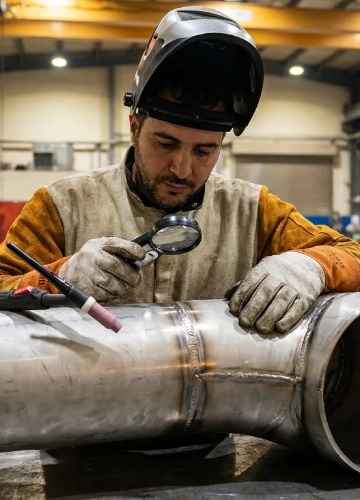
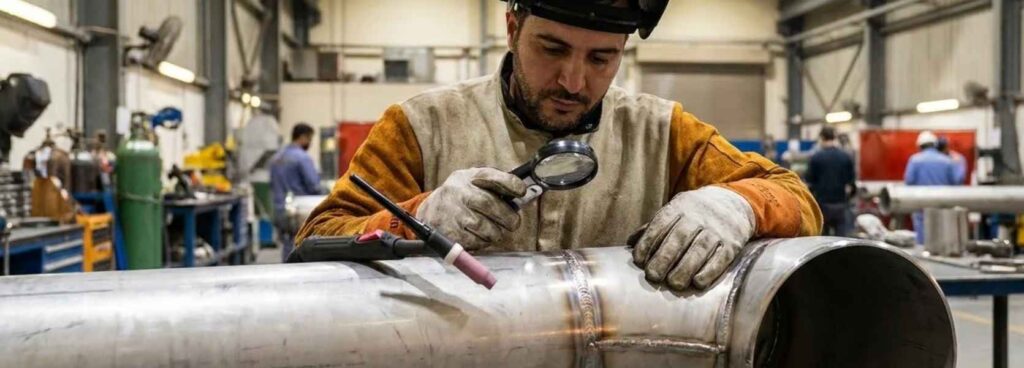
Even the smallest crack in a stainless steel weld can cause major problems. A seemingly minor imperfection can cause a leak, expensive repairs, or equipment malfunction.
That’s why stainless steel welding defects prevention is crucial in industrial manufacturing.
High weld quality is important at Brightsun Industries, and we recognize it as critical to the strength, safety, and service life of metal products. Every pipe and joint, from production lines to custom steel structures, requires proper care and treatment.
Defects are common to all three welding techniques: TIG, MIG and Stick welding. In this guide, the major welding problems are explained, their causes are identified, and practical methods are provided for preventing them.
At a Glance
Stainless steel has good corrosion resistance and strength. But poor welding techniques can affect its performance.
Common causes include:
It is important to understand these causes to reduce the risk of defects.
Check out Brightsun’s steel fabrication and welding services to learn more about welding techniques.
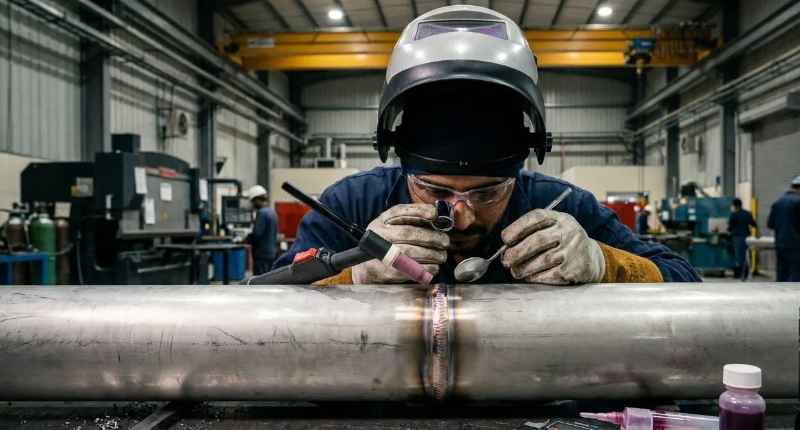
These are the typical defects found in stainless steel welding and how they can be avoided.
Welding defects can reduce joint strength, corrosion resistance, and appearance. Identifying these problems early helps reduce repairs and product defects.
Porosity refers to small holes within welds.
When gas gets trapped in the weld as it cools, it causes porosity. Such small holes can weaken the joint and make it more likely to leak.
Common causes:
Prevention: Use a suitable solvent to remove impurities from the metal before welding. Ensure correct gas flow and prevent strong air currents from affecting the weld.
These measures help avoid welding defects that stainless steel manufacturers commonly experience.
Cracking is a very serious welding defect. Cracks can occur while the weld cools or when the welded joint is under stress.
Incorrect filler materials, poor joint design, and inadequate heat control can increase the chance of cracking.
Prevention: Select the right filler wire, control heat input, and follow approved welding procedures.
With proper planning, stainless steel welding defects prevention can improve weld reliability.
Undercutting occurs when grooves form along the edges of a weld. This reduces the metal thickness around the joint and can weaken it.
Frequent causes include excessive welding current, poor angles, and travel speed that is too fast.
Prevention: Control welding current, maintain the proper torch angle, and keep a consistent travel speed.
Lack of fusion is a failure to form a good bond between the weld metal and the base metal or previous weld layers.
The external appearance may be satisfactory, but there could be weak areas in the weld.
Prevention: Take care when preparing joints, select proper heat input, and clean between weld passes.
Heat tint appears as yellow, blue, or dark spots around stainless steel welds.
When oxidation is excessive, corrosion resistance is reduced, particularly in harsh environments.
TWI’s technical guidance explains that heat tint can increase the risk of local corrosion.
Prevention: Regulate heat input, use appropriate gas shielding, and clean the weld when necessary.
The table below shows common welding defects, their causes, and prevention methods.
Welding defect | Main cause | Prevention |
Porosity | Poor gas shielding | Clean surfaces and inspect gas flow |
Cracking | Stress or incorrect filler | Select suitable filler |
Undercutting | Excessive current | Adjust current or speed |
Lack of fusion | Poor bonding | Improve joint preparation |
Heat tint | Excessive oxidation | Control heat and shielding |
Distortion | Uneven heating | Plan welding sequence |
All welding methods have their own advantages and drawbacks. When selecting a process, think about which defects manufacturers may encounter and how to avoid welding defects stainless steel projects may face.
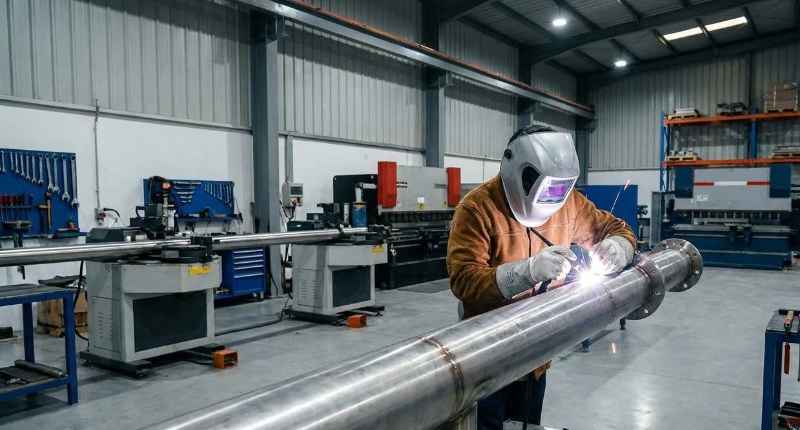
TIG welding provides precise heat control and clean welds. It is suitable for thin stainless steel sheets and joints requiring a clean finish. It is also widely used for pipes and joints.
Choosing the right welding process also influences weld quality and defect prevention. Read our guide to TIG vs MIG welding for stainless steel to understand which process suits different applications.
Poor shielding gas coverage, however, may result in porosity and oxidation.
Prevention tips:
MIG welding works well for longer welds and faster production. However, spatter and poor fusion may occur if the voltage, wire speed, or shielding gas is incorrect.
Prevention tips:
These practices support stainless steel welding defects prevention during industrial production.
Stick welding suits many outdoor fabrication and repair applications.
But trapped slag, damp electrodes, and poor welding techniques can affect weld quality.
Prevention tips:
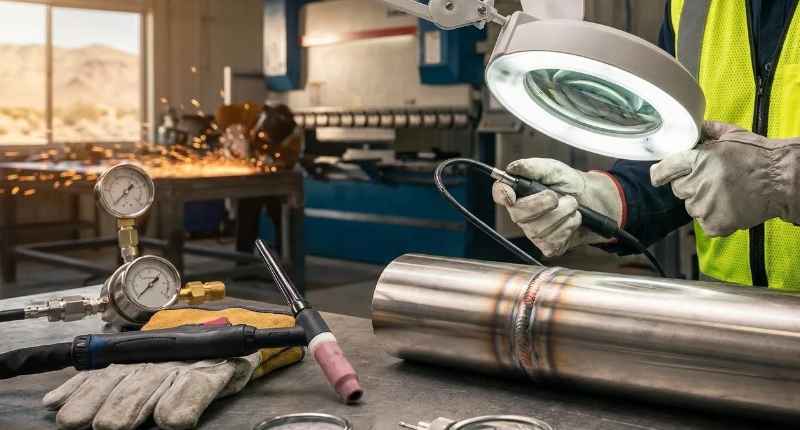
Good welding starts with proper preparation. Skilled welders and inspection also affect the finished product.
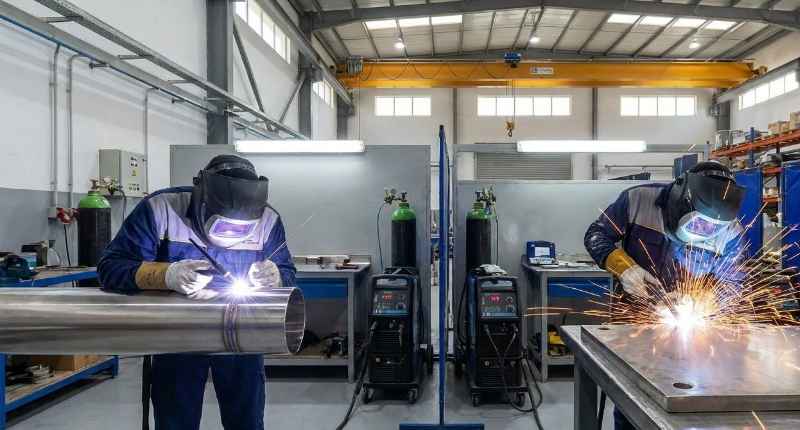
Some practical stainless steel welding defect prevention steps include:
For critical projects, visual inspection might not be sufficient. Further testing may be necessary.
These steps help avoid welding defects that stainless steel manufacturers may encounter during production.
Welding quality is just as critical to an industrial buyer as it is to the end user. Poorly welded joints may lead to delays, maintenance issues, and increased project costs.
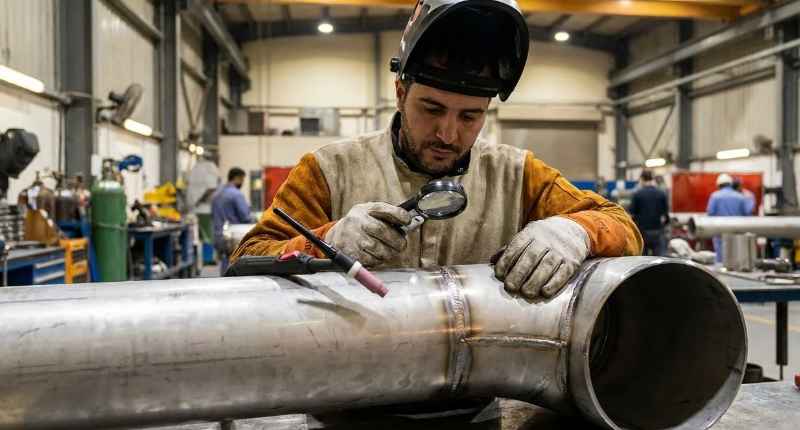
Find out how much experience the fabricator has in welding and whether they understand the material. Check their inspection methods, quality records, and certificates.
Understanding welder qualifications is equally important when preventing fabrication issues. Learn more about stainless steel welding certifications in the UAE and the documents buyers should verify before approving a welding contractor.
Quality begins at Brightsun Industries with proper planning, the right materials, and controlled fabrication.
These quality practices are part of a broader approach to industrial fabrication. Explore our stainless steel welding services in Dubai to understand the processes, materials, and quality controls involved.
We focus on:
Stainless steel welding defects prevention depends on clean materials, correct welding settings, skilled welders, and proper inspection.
Identifying typical defects helps manufacturers minimize rework and increase product reliability.
Whether using TIG, MIG, or Stick welding, choosing the correct method is important.
Brightsun Industries provides welding and customized stainless steel manufacturing services.
Looking for reliable welding services? Contact Brightsun Industries to discuss your project.
Stainless steel welding defects prevention involves controlling materials, welding procedures, and inspection methods to reduce defects.
Clean metal surfaces, choose appropriate filler metal, and follow recommended welding practices.
Poor shielding gas coverage, moisture, or contamination often causes porosity.
TIG suits precision work, MIG supports faster production, and Stick suits many repair jobs.
Stress, unsuitable filler materials, or improper temperature control can cause cracking.
Yes. Proper welding control can reduce repairs, material waste, and rework.
Use appropriate wire speed, shielding gas, clean joint surfaces, and correct voltage.
Yes. Excessive heat may cause distortion, oxidation, and reduced corrosion resistance.
Ultrasonic or radiographic testing can detect certain defects inside welds.
They help maintain weld quality, product reliability, and long service life.
At a Glance
Related Blogs

Shed No. 10, Fresh Express Warehouse,
Road B1, Dubai Investments Park 1,
Dubai, UAE.
+971 43807099
+971 563244963
+971 503226480