- +971 43807099
- +971 563244963
- brisunco@emirates.net.ae

- Meet Us
Shed No. 10,
Fresh Express Warehouse, Road B1, DIP 1,
Dubai, UAE.
Shed No. 10,
Fresh Express Warehouse, Road B1, DIP 1,
Dubai, UAE.
New
New
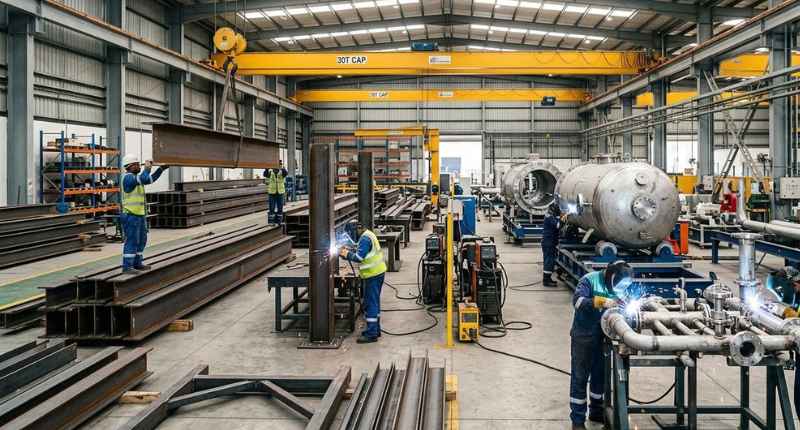
A small steel part may not look important until it fails. A damaged bracket, curved guard or damaged machine piece may delay a complete production line. Work can come to a halt, in other cases, until the correct replacement is received.
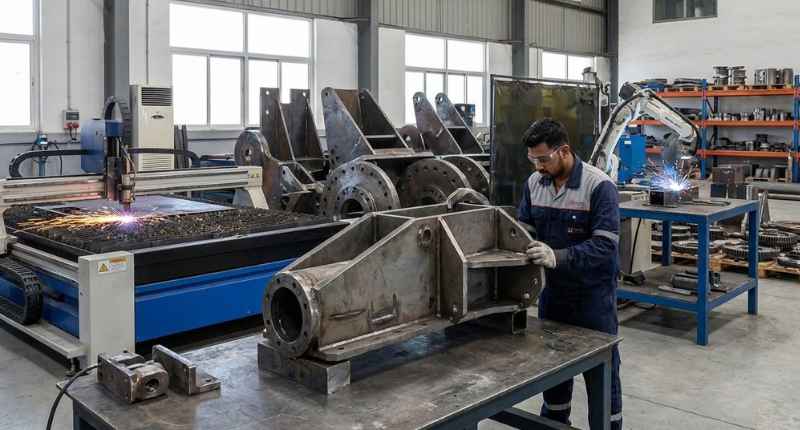
This is where the use of custom steel fabrication of industrial equipment comes in. Brightsun makes industrial parts based on drawings, samples, dimensions, materials, and actual working needs. It may be one replacement part or a recurring order. The most basic goal is easy: create an item that fits and will work for the purpose it was created.
This guide entails the procedure, materials, applications, quality control and considerations prior to making an order.
For a broader overview of fabrication methods, materials, services, costs, and supplier selection, see this guide to custom steel fabrication services in UAE.
At a Glance
Custom steel fabrication for industrial equipment means making a steel component for a particular machine, project, or industrial use. It is different from buying a ready-made part because the size, shape, material, and other details can be decided according to the job.
A fabricator may use a drawing, CAD file, physical sample, or measurements to understand what has to be made.
The work may involve:
Some parts need only one or two of these steps. Others pass through several processes before they are ready.
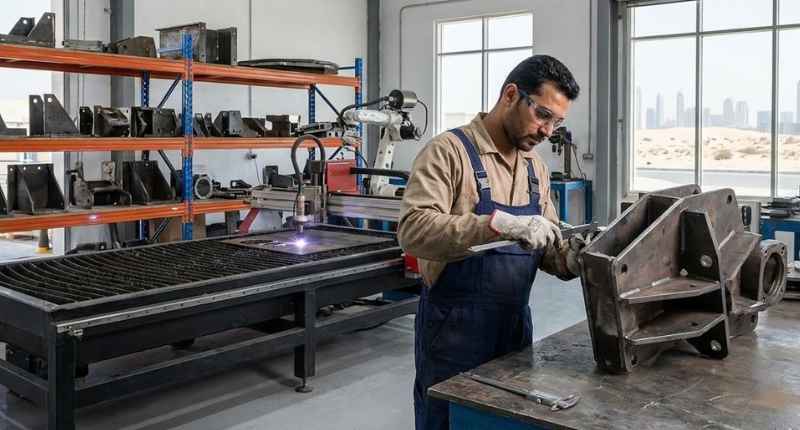
Industrial machines do not always work in easy conditions. Heat, vibration, moisture, dust, impact, and heavy loads can all affect a component over time.
An incorrect fit can also cause problems. With custom steel fabrication for industrial equipment, the buyer can provide details such as dimensions, material grade, hole positions, tolerances, weld needs, and surface finish.
This is especially useful when an old component is damaged or difficult to find in the market.
For projects where the choice between standard structural work and made-to-order components matters, see structural steel vs custom steel fabrication.
Steel parts are found almost everywhere in industrial work. Some support machinery. Some protect moving components. Others connect different sections of equipment.
Common applications for steel parts fabrication UAE include:
These parts are used in factories, workshops, construction equipment, processing plants, and material handling systems.
Local manufacturing is also part of the UAE’s wider industrial plans. The UAE Operation 300Bn strategy aims to increase the industrial sector’s contribution to GDP from AED 133 billion to AED 300 billion by 2031.
One practical reason for choosing custom steel fabrication for industrial equipment is the need to replace an old or damaged part.
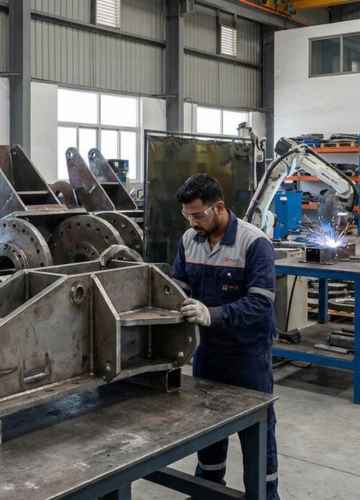
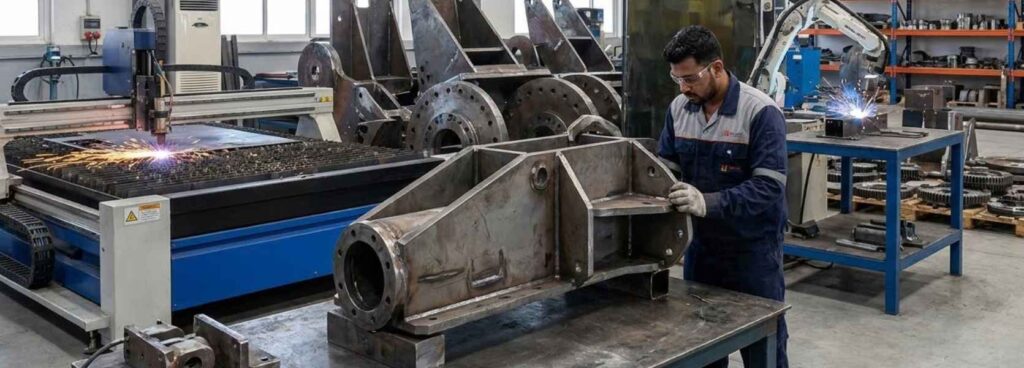
Imagine that a machine bracket has cracked, but the original part is no longer easily available. If the technical details can be confirmed, the old bracket may provide useful information for producing a replacement.
The new component can then be cut, formed, machined, welded, and checked according to the job requirements.
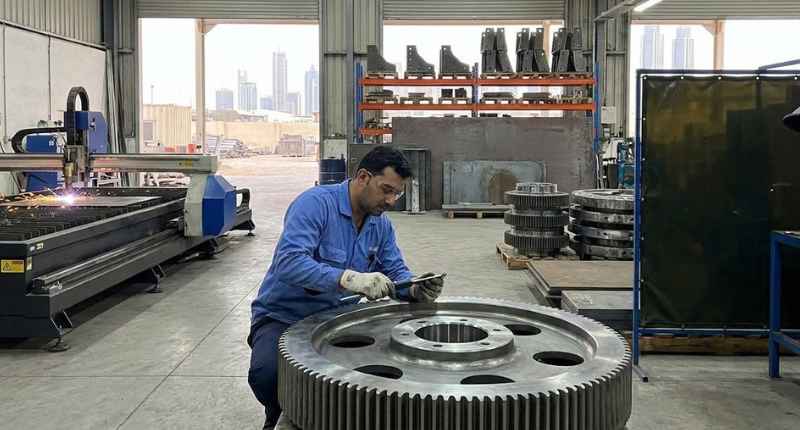
Good fabrication starts before any steel is cut. The fabricator first needs to understand the drawing, dimensions, material, quantity, and purpose of the part.
This early review matters because a small mistake at the beginning may lead to wasted material or rework later.
A typical custom steel fabrication for industrial equipment job may follow this process:
Stage | What Happens | Main Purpose |
Design review | Drawings and details are checked | Understand the job |
Material selection | Steel grade and thickness are chosen | Match the application |
Cutting | Steel is cut to shape | Create the basic part |
Forming | Material is bent or rolled | Form the required shape |
Machining | Holes, slots or threads are made | Improve fit and accuracy |
Welding | Sections are joined | Build the assembly |
Inspection | Important details are checked | Confirm requirements |
Finishing | Final surface work is completed | Prepare the finished part |
The exact process changes from job to job. A simple plate, for example, will not need the same work as a welded machine frame.
For a detailed look at each stage from design through delivery, see the custom steel fabrication process from design to installation.
Material choice should not be an afterthought. The steel needs to suit the place where the finished component will work.
For steel parts fabrication UAE, mild steel may suit many general industrial jobs. Stainless steel can be considered where corrosion resistance is important.
Before choosing a material, it helps to ask a few basic questions. Is the part indoors or outdoors? Will it face water or chemicals? Is there heat, impact, or a heavy load? Will the component need welding or machining?
The answers give the fabricator a clearer idea of what the part will face during use.
There is more to fabrication than creating the right shape. A finished part has to work with the rest of the machine.
Some key benefits of custom steel fabrication for industrial equipment are:
For companies using steel parts fabrication UAE, local production can also be useful when a special component is not available as a standard item.
A fabricator can only work with the information available. A clear request for quotation, or RFQ, can therefore save time for both sides.
Before ordering custom steel fabrication for industrial equipment, try to provide:
Even a small missing detail can matter. A bracket drawing may show its overall size, for example, but the exact position of its holes may be just as important.
For a broader buyer-focused evaluation, review this guide on how to select a custom steel fabricator in Dubai before choosing a fabrication partner.
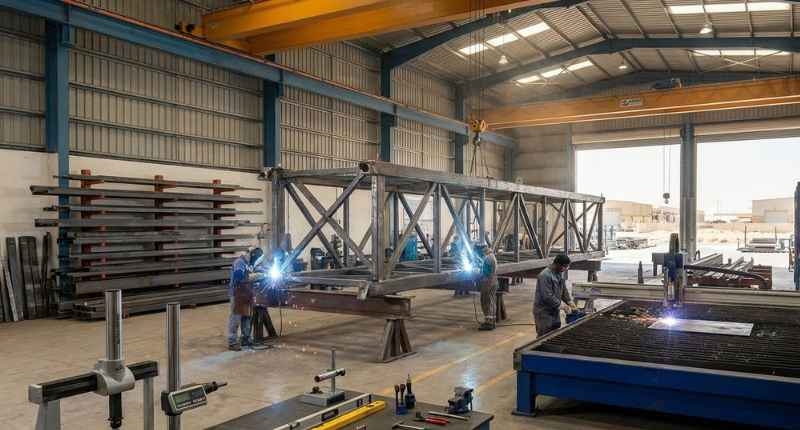
Industrial parts need the correct fit, material, and finish. Brightsun supports steel parts fabrication UAE with several processes available through one workshop.
Custom steel fabrication for industrial equipment gives industrial buyers more control over dimensions, material, finish, and the final use of a component.
Have a drawing or sample ready? Contact Brightsun with the part details, material, quantity, and required delivery date to discuss your project.
Custom steel fabrication for industrial equipment is the production of steel parts for a particular machine or industrial application. Cutting, bending, welding, machining, and finishing may be involved.
Projects may include brackets, guards, frames, bases, mounting plates, covers, supports, clamps, skids, and welded assemblies, subject to technical review.
Steel parts fabrication UAE is useful for custom sizes, replacement components, small batches, and parts that are not readily available as standard products.
It may be possible when a suitable drawing, sample, CAD file, or accurate measurements are available for review.
It depends on the job. Load, corrosion, heat, wear, welding, machining, and working conditions should be considered before choosing a grade.
Yes, where required. CNC machining can produce holes, slots, faces, threads, and other accurate features.
Send drawings, dimensions, material details, quantity, tolerances, finish, inspection needs, and your required delivery date.
Checks may include dimensions, alignment, hole positions, weld condition, surface finish, and comparison with the approved drawing.
One-off and low-volume work may be possible depending on the part and its technical requirements.
Provide complete information from the start. Clear drawings, quantities, material details, and delivery requirements reduce the need for repeated questions.
At a Glance
Related Blogs

Shed No. 10, Fresh Express Warehouse,
Road B1, Dubai Investments Park 1,
Dubai, UAE.
+971 43807099
+971 563244963
+971 503226480