- +971 43807099
- +971 563244963
- brisunco@emirates.net.ae

- Meet Us
Shed No. 10,
Fresh Express Warehouse, Road B1, DIP 1,
Dubai, UAE.
Shed No. 10,
Fresh Express Warehouse, Road B1, DIP 1,
Dubai, UAE.
New
New
Structural steel and custom steel fabrication are not competing options. They are different tools for different problems. Using the wrong one adds cost, extends timelines, and creates installation problems that could have been avoided at the specification stage.
The confusion usually starts at the enquiry stage when a procurement team uses the terms interchangeably, gets back incompatible quotes, and cannot understand why the prices are so far apart. This guide explains what each term actually covers, where the boundary between them sits, and how UAE project teams can identify which one their project needs before the enquiry goes out.
At a Glance
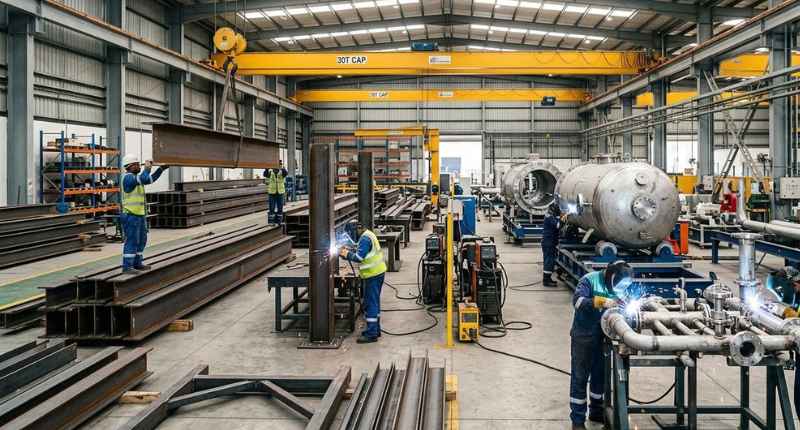
Structural steel fabrication uses standard rolled sections produced to defined dimensional tolerances and material grades. Universal beams, universal columns, rectangular hollow sections, circular hollow sections, angle, channel, and flat bar are all standard sections produced in volume and available from UAE steel stockholders with short lead times.
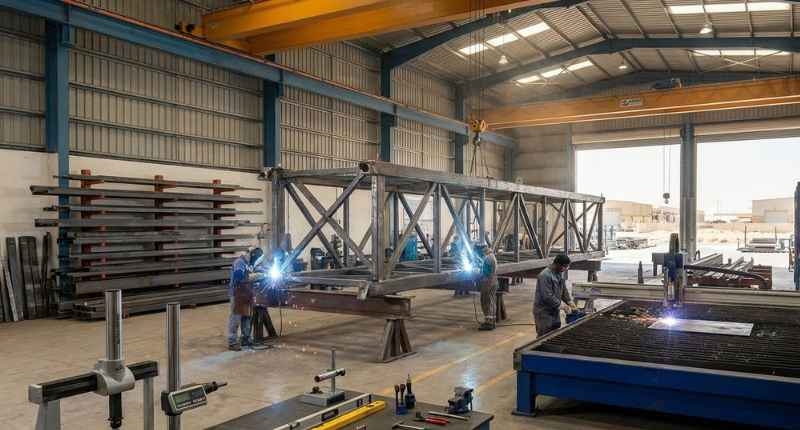
The fabrication work on structural steel is primarily cutting to length, drilling bolt holes, welding connection plates, and assembling components into frames, trusses, and support structures. The geometry is defined by the structural engineer’s drawings and the fabrication is straightforward for any shop with basic cutting and welding capability.
Structural steel fabrication is fast, cost-effective, and appropriate for the majority of building frames, mezzanines, platforms, pipe racks, equipment supports, and general steelwork packages that make up the bulk of construction and industrial project scope in the UAE.
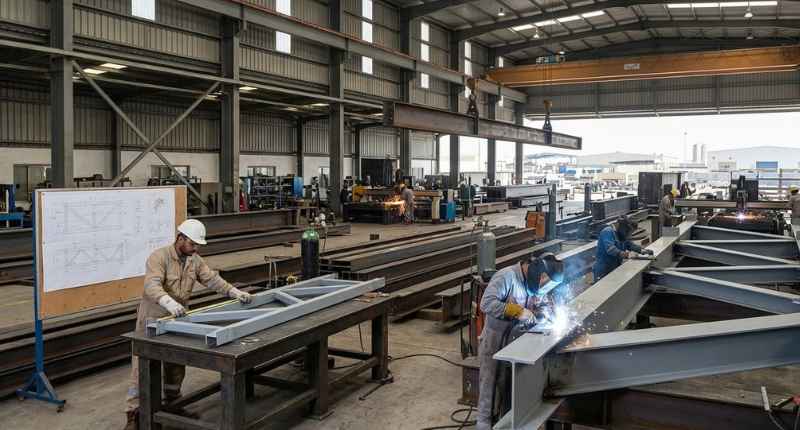
Custom steel fabrication starts from raw material and produces a component to a specific design that does not exist in any catalogue. The geometry, dimensions, material grade, wall thickness, and configuration are all defined by the application.
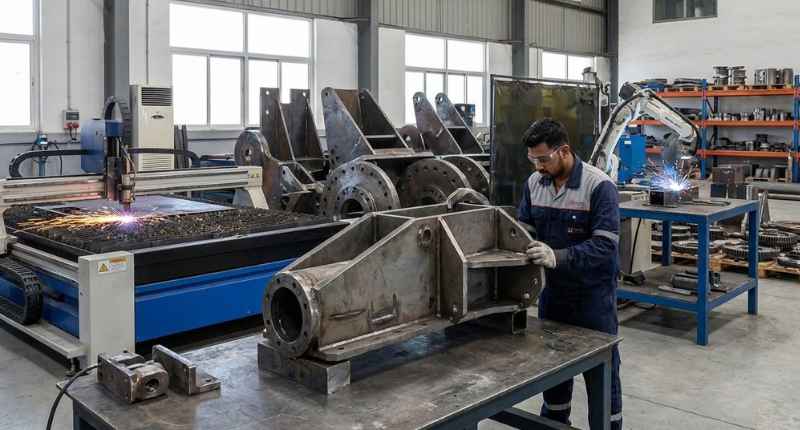
Pressure vessels, heat exchangers, custom pipe spools to non-standard dimensions, specialist structural connections with complex geometry, wear-resistant liners, skid-mounted equipment packages, and marine structural components are all in the custom fabrication scope. The fabrication process involves engineering design, detailed drawings, material procurement to specific grades, forming, precision welding to qualified procedures, NDT inspection, and formal documentation.
For a detailed breakdown of these stages, see our guide to custom steel fabrication process from design through installation.
Custom fabrication costs more than structural fabrication and takes longer. It requires a fabrication shop with wider capability, more controlled processes, and stronger quality systems. It also produces a component that performs the specific function it was designed for, which a standard structural section cannot.
For a closer look at fabricated machinery components, replacement parts, and industrial equipment applications, see custom steel fabrication for industrial equipment.
The boundary between structural steel and custom fabrication is not always clear, and most real projects sit somewhere between the two extremes.
A standard pipe rack built from universal columns and beams with bolted connections is pure structural fabrication. A pressure vessel with custom nozzle positions, a non-standard diameter, and a specific material grade for a corrosive service fluid is pure custom fabrication. A structural support frame with precision-machined baseplate surfaces, tight anchor bolt tolerances, and a specific coating system for an offshore environment sits in between. It uses standard sections but requires fabrication controls and inspection standards closer to custom work.
The distinction matters because it determines which fabrication shops are capable of producing the work, what quality systems and certifications are required, what the realistic lead time is, and what the complete scope of the deliverable includes. A structural steel fabricator without pressure vessel certification cannot produce coded pressure equipment. A precision custom fabrication shop without structural experience may not be the right choice for a high-volume general steelwork package.
Before awarding the work, buyers should know how to select a custom steel fabricator in Dubai by verifying that the fabricator’s certifications, technical capabilities, and quality systems match the actual fabrication requirements.
The most common mistake UAE project teams make is applying structural steel procurement practices to custom fabrication scope. Structural steel is tendered on a rate per tonne basis, awarded to the lowest bidder, and managed against a delivery schedule. This works for standard sections and simple fabrication.
Custom fabrication cannot be managed this way. A custom component tendered on a rate per tonne without a complete specification, approved drawings, and defined inspection requirements produces quotes that are not comparable and a contract that will generate disputes. The scope of a custom fabrication job is defined by its engineering content, its material specification, its inspection requirements, and its documentation deliverables, none of which appear in a tonnage rate.
The second mistake is assuming that any fabrication shop capable of structural steel work is capable of custom fabrication to the same standard. Welding a connection plate to a beam and welding a pressure vessel nozzle to ASME Section VIII are both welding operations. They require entirely different levels of procedure qualification, welder certification, inspection, and documentation.
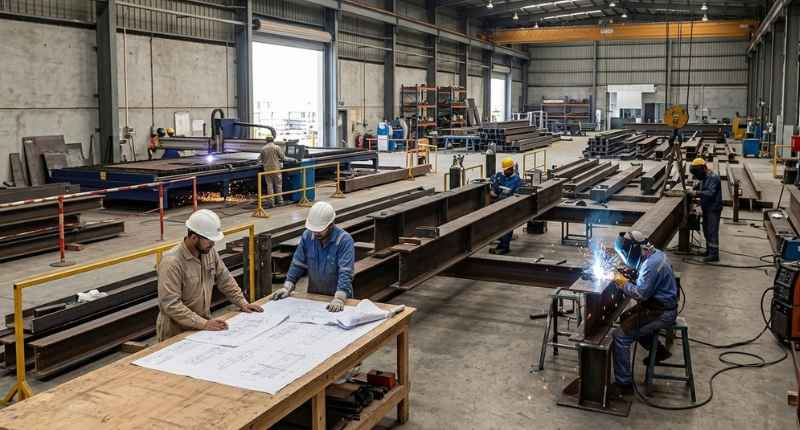
Most industrial and infrastructure projects in the UAE contain both structural steel and custom fabrication scope within the same overall project.
An oil and gas processing facility will have structural steel pipe racks, access platforms, and equipment support frames alongside custom-fabricated pressure vessels, heat exchangers, and process pipe spools. The structural scope goes to a structural fabricator. The custom scope goes to a coded fabrication shop. Managing the interface between the two, including dimensional coordination, delivery sequencing, and inspection hold points, is a project management function that cannot be collapsed into a single contract without careful scope definition.
A marine project will have structural steel outfitting, handrails, and deck supports alongside custom pipe penetrations, pressure-rated hatches, and specialist structural connections designed for fatigue loading. The structural elements fabricate quickly and cheaply. The custom elements take longer, cost more, and require closer management.
Knowing which scope items belong in which category, and specifying them accordingly in the enquiry documents, is what allows project teams to get accurate and comparable quotes, select the right fabricators for each scope, and manage delivery without surprises.
The decision between structural steel and custom fabrication should be driven by what the component needs to do, not by budget preference or procurement habit.
If the component carries a defined structural load in a standard configuration and standard sections fit the geometry, structural fabrication is the right choice. If the component operates under pressure, in a corrosive environment, at extreme temperatures, or in a fatigue loading regime, or if it requires a geometry that standard sections cannot produce, custom fabrication is the right choice.
For a broader overview of applications, materials, fabrication methods, costs, and supplier selection, read our guide to custom steel fabrication services in UAE.
Budget pressure sometimes pushes project teams toward structural solutions for applications that need custom fabrication. The result is a component that does not perform as required, fails prematurely, or creates downstream problems during commissioning or maintenance. The cost of that outcome consistently exceeds the cost difference between the structural and custom fabrication options at the procurement stage.
Structural steel vs custom steel fabrication is not a question with a single answer. It is a classification exercise that should be applied component by component across the project scope, with each item allocated to the fabrication type that matches its functional requirements, inspection obligations, and documentation needs.
UAE project teams who make this classification correctly before the enquiry stage go on to get comparable quotes, select the right fabrication partners, and build projects that perform as designed from the first day of operation.
Brightsun Industries provides both structural steel fabrication and custom steel fabrication services across Dubai and the UAE, with ISO 9001:2015 certification, qualified welders, and documented quality systems that cover the full range from general steelwork to coded pressure equipment and precision custom components.
Contact us here to discuss your project scope and identify the right fabrication approach for each element.
Q1: What is the main difference between structural steel vs custom steel fabrication?
Structural steel fabrication uses standard rolled sections cut, drilled, and welded into frames and supports, while custom steel fabrication produces components to a specific design from raw material with engineering documentation, qualified welding procedures, and formal inspection.
Q2: How do steel fabrication types explained UAE project teams need to understand affect procurement?
Structural steel is tendered on a rate per tonne with short lead times and straightforward scope, while custom fabrication requires complete engineering drawings, material specifications, and inspection requirements before quotes can be compared accurately.
Q3: Can the same fabrication shop handle both structural and custom steel fabrication in the UAE?
Some fabrication shops handle both, but the capability requirements differ significantly, and a shop qualified for structural work is not automatically qualified for coded custom fabrication such as ASME pressure vessels or marine classification work.
Q4: How do UAE project teams identify which scope items need custom fabrication versus structural?
Components operating under pressure, in corrosive environments, under fatigue loading, or requiring geometry that standard sections cannot produce need custom fabrication, while standard load-bearing structures in conventional configurations suit structural fabrication.
Q5: Why does applying structural steel procurement practices to custom fabrication create problems?
Tendering custom fabrication on a rate per tonne basis without complete specifications produces incomparable quotes, under-defined scope, and contracts that generate disputes when inspection, documentation, and material requirements emerge after award.
Q6: What certifications distinguish a custom fabrication shop from a structural steel fabricator in the UAE?
Custom fabrication shops hold certifications including ASME U-Stamp for pressure vessels, classification society approval for marine work, and ISO 9001 with documented welding procedure qualifications, none of which are required for general structural steel fabrication.
Q7: How does lead time differ between structural steel and custom fabrication in the UAE?
Structural steel fabrication from standard sections typically delivers in two to four weeks from approved drawings, while custom fabrication involving specialty materials, coded inspection, and formal documentation runs six to sixteen weeks depending on scope and complexity.
Q8: What happens when a project specifies structural fabrication for scope that needs custom fabrication?
The component either fails to meet the required performance standard, fails prematurely in service, or requires costly rework and replacement, with the total cost of that outcome consistently exceeding the cost difference between the two fabrication approaches at the procurement stage.
Q9: How are structural and custom fabrication scopes typically managed on the same UAE project?
Each scope type is awarded to a fabricator qualified for that work, with the interface between the two managed through dimensional coordination, delivery sequencing, and inspection hold point alignment in the overall project programme.
Q10: Is custom steel fabrication always more expensive than structural steel fabrication in the UAE?
Custom fabrication costs more per unit to produce due to engineering content, material specification, inspection, and documentation requirements, but produces a component designed for the specific application that outperforms and outlasts a structural approximation in demanding service conditions.
At a Glance
Related Blogs

Shed No. 10, Fresh Express Warehouse,
Road B1, Dubai Investments Park 1,
Dubai, UAE.
+971 43807099
+971 563244963
+971 503226480