- +971 43807099
- +971 563244963
- brisunco@emirates.net.ae

- Meet Us
Shed No. 10,
Fresh Express Warehouse, Road B1, DIP 1,
Dubai, UAE.
Shed No. 10,
Fresh Express Warehouse, Road B1, DIP 1,
Dubai, UAE.
New
New
Hydraulic hose failure isn’t just an inconvenience, it can lead to costly downtime, unexpected maintenance, and serious safety hazards. Learning the reasons for hydraulic hose failure may save money, time, and head-scratching.
Here are five critical things to look out for and how to avoid them:
At a Glance
Hydraulic leaks may seem minor at first, but they often signal bigger issues, such as worn seals, loose fittings, or hidden cracks in the hose, which can escalate quickly. Small leaks can gain momentum quickly, resulting in fluid and system pressure loss. If this is not addressed, it leads to system failure, equipment damage, and environmental danger.
How to Prevent It:
A sharp bend or kink in a hydraulic hose restricts fluid flow, causing turbulence and pressure drops, which reduce system efficiency and can lead to premature failure. A kink can result in bursts or complete hose failure. Kinks most commonly occur during installation when hoses are routed too tightly and do not have enough slack to avoid bending at sharp angles.
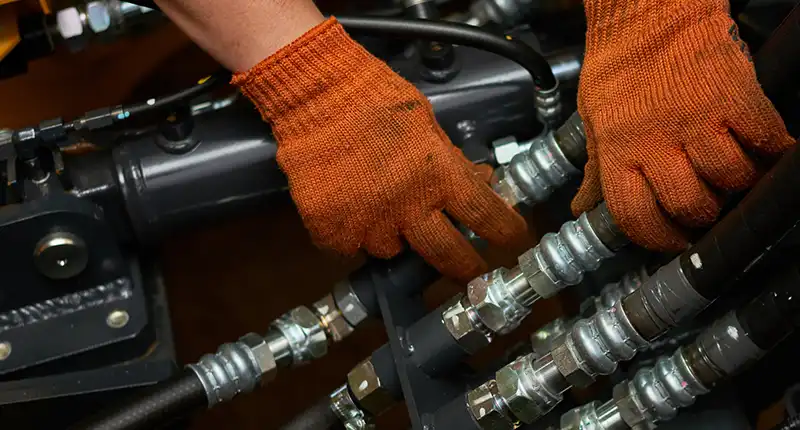
Over time, hoses exposed to friction against sharp edges, rough surfaces, or other components can wear down. Abrasion can damage the outer surface of the hose. This often leads to leaks, contamination, and, in some cases even complete hose failure. This type of damage is usually gradual, but once it reaches a critical point, a catastrophic failure is almost inevitable.
How to Prevent It:
Overheating is a common contributing element of premature hydraulic hose failure. Excessive heat can degrade hose materials, cause hydraulic fluid to break down, and compromise hose integrity, leading to cracks and leaks. Overheated systems can cause hoses to expand and crack the structure and leak or rupture. Common causes include lack of cooling, improper fluid, or excessive system pressure.
It can be prevented by:
Using the wrong size or type of fitting can prevent proper sealing, leading to leaks, pressure loss, and potential system failure. In a mismatched fitting, the seal is not created properly, which may result in leaks, pressure loss, or even hose blowouts. As simple as it may seem, using an incorrect fitting is one of the most common causes of hydraulic hose failure.
How to Prevent It:
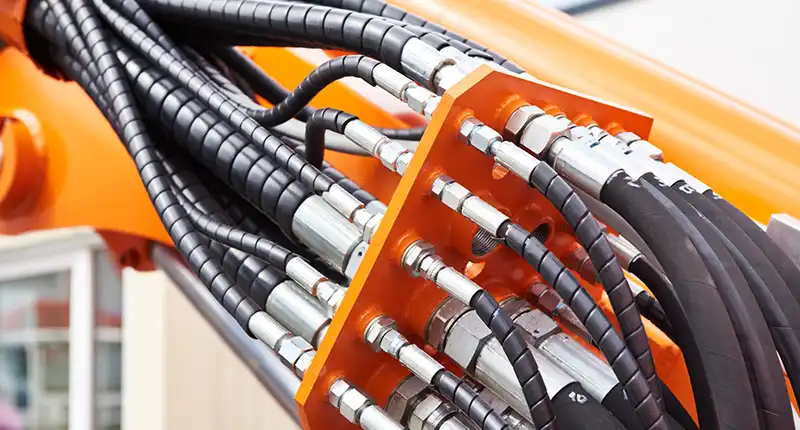
Hydraulic hoses fail due to improper installation, pressure surges, environmental wear, chemical incompatibility, and inadequate maintenance. They suffer stress in the form of pressure, heat, and friction that eventually causes them to leak, burst, or lose efficiency. Proper inspection, selecting the right materials, and proper installation can go a long way in extending their service life and preventing unexpected failure.
Need help with hydraulic hose problems or want high-quality fittings and professional advice? BrightSun Industries can help. Fill out our Contact form and we will get in touch.
1. What are the most common signs of hydraulic hose failure?
Leaks, visible cracks, kinks, overheating, and worn-out fittings are key indicators. Spotting them early can prevent costly breakdowns.
2. How often should hydraulic hoses be inspected?
Ideally, hoses should be checked every 3–6 months, or more frequently if the equipment is used heavily or in harsh conditions.
3. Can I reuse old fittings when replacing a hydraulic hose?
It’s not recommended. Reusing old fittings can lead to improper sealing and potential failure—always use new, compatible fittings.
4. What’s the best way to prevent hose abrasion?
Use abrasion-resistant sleeves and ensure proper hose routing away from sharp edges or high-friction areas.
5. How does heat affect hydraulic hoses?
Excessive heat degrades hose materials and fluid, leading to cracks, leaks, and reduced system performance. Proper cooling and ventilation help prevent this.
At a Glance

Shed No. 10, Fresh Express Warehouse,
Road B1, Dubai Investments Park 1,
Dubai, UAE.
+971 43807099
+971 563244963
+971 503226480